
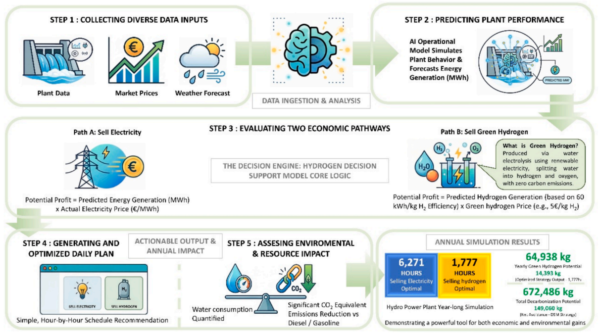
Researchers have developed an AI-driven Hydrogen Decision Support Model (H2-DSM) to optimize Run-of-River (RoR) hydropower plants. This approach enhances economic and environmental sustainability, transforming hydropower assets into virtual batteries, crucial for navigating the volatile net-zero energy transition.
Addressing Grid Instability
The global push towards net-zero emissions is reshaping the energy landscape, demanding a rapid integration of variable renewable energy (VRE) sources like solar and wind. While these sources are pivotal for reducing carbon footprints, their intermittent nature poses significant challenges for grid stability. This instability necessitates flexible and dispatchable power solutions, along with large-scale energy storage systems to balance the fluctuating supply and demand.
Hydropower, as the largest source of low-carbon electricity, plays a crucial role in maintaining system stability due to its reliability and rapid response capabilities. However, not all hydropower plants offer the same level of operational flexibility. Run-of-River (RoR) hydropower plants, which make up a substantial portion of Europe’s hydropower fleet, are particularly constrained by their limited water storage capacity and operational inflexibility. This limitation hampers their ability to contribute effectively to system resilience and sustainability.
In this context, the integration of green hydrogen production with RoR hydropower presents a promising solution. Green hydrogen, produced via water electrolysis using renewable electricity, is a key decarbonization vector for sectors that are difficult to electrify, such as heavy transport and industry. However, the economic viability of green hydrogen production remains a significant barrier, as it is currently more expensive than conventional fossil-based methods.
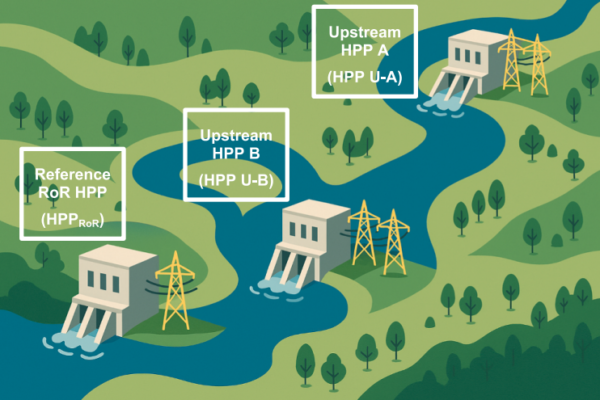
The challenge lies in determining when it is economically and environmentally advantageous to divert water resources from electricity generation to hydrogen production. This decision-making process is complicated by the inherent limitations of RoR operations, such as managing upstream flows and adhering to mandatory ecological flow requirements. Therefore, a sophisticated, data-driven framework is essential to navigate these complex constraints and optimize the hybridization of RoR hydropower with green hydrogen production.
Innovative AI-Driven Solutions
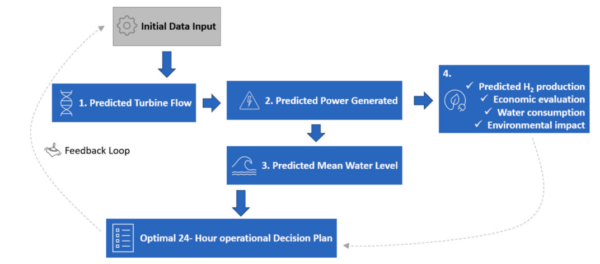
The study introduces an AI-driven Hydrogen Decision Support Model (H2-DSM) designed to optimize the operation of RoR hydropower plants hybridized with green hydrogen production facilities. The model employs a high-fidelity digital twin approach, utilizing advanced machine learning techniques to create accurate predictive models for critical parameters such as power generation and turbine flow. This predictive foundation enables real-time techno-economic arbitrage with high predictive fidelity.
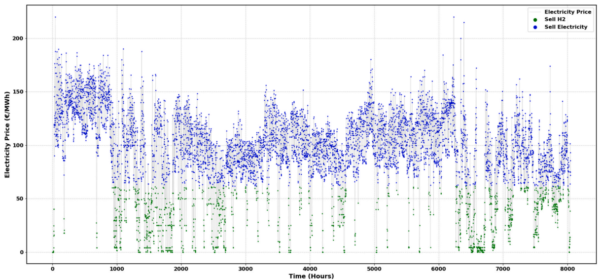
The core innovation of the H2-DSM lies in its dynamic techno-economic optimization capability. It integrates real-time operational forecasts with dynamic market price data and specific technical constraints, such as ecological flows, to identify the profitable equilibrium between selling electricity and producing hydrogen. This approach allows the model to quantitatively determine the optimal balance between maximizing short-term revenue from dynamic electricity sales and realizing long-term profitability and sustainability benefits from hydrogen co-production.
The model’s development and validation are based on the operational profile of a reference Run-of-River hydroelectric facility. This facility operates within a cascade hydro system, characterized by low storage capacity and the need to modulate water flows discharged from upstream hydropower plants. The facility’s operational flexibility is defined by two non-negotiable constraints: flow demodulation and ecological flow requirements. These constraints establish the complex techno-economic optimization scenario addressed by the H2-DSM.
Transformative Outcomes
The study’s findings demonstrate the H2-DSM’s ability to transform hybridized RoR hydropower assets into virtual batteries, effectively decoupling physical river flows from economic grid obligations. The model identifies a strategic equilibrium of 1,777 annual hours where green hydrogen production surpasses the profitability of direct electricity sales, achieving a Production Levelized Cost of Hydrogen (PLCOH) of 3.86 €/kg.
This performance not only enhances the economic viability of green hydrogen production but also contributes significantly to environmental sustainability. The optimized operation of a single 450 kW unit results in a reduction of 149,060 kg CO2 equivalent, with a full decarbonization potential of 672,486.75 kg CO2 equivalent if the facility is fully utilized.
Future Directions and Opportunities
The H2-DSM provides the quantitative evidence necessary to unlock private capital for decentralized renewable hubs, emphasizing the environmental-economic nexus of Hydropower 4.0. By demonstrating the economic sustainability required for widespread deployment of Power-to-Gas solutions, this research paves the way for future advancements in the integration of renewable energy systems.
As the energy sector continues to evolve, the insights gained from this study offer a promising pathway for enhancing the flexibility and sustainability of existing hydropower assets. The authors invite further collaboration and exploration of this innovative approach, encouraging stakeholders to contribute to the ongoing transformation of the energy landscape.
Reference: Eduardo Rodríguez Fernández-Arroyo, Alberto Casalderrey Area, Diego Quiñoy Peña. “Maximizing profit and sustainability in RoR hydropower: an AI-driven hydrogen decision support model (H2-DSM).” Energy Conversion and Management: X, 2026. DOI: https://doi.org/10.1016/j.ecmx.2026.101660