
Delft University of Technology researchers present a novel method for real-time tilt and symmetry sensing using a MEMS accelerometer. By eliminating the need for double integration, this study enhances structural health monitoring on resource-constrained hardware, addressing traditional challenges with improved accuracy and efficiency.
Addressing Long-Standing Challenges
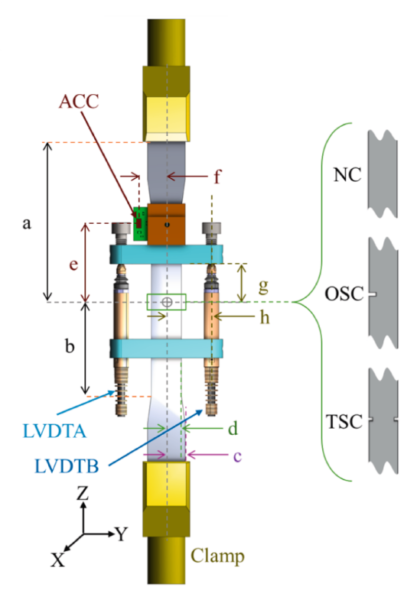
Structural health monitoring (SHM) has faced persistent challenges in accurately measuring displacement and inclination. Conventional methods relying on double integration of acceleration data encounter issues like signal drift and limited computational power in low-cost microcontrollers. These challenges are especially significant in high-precision applications such as transportation infrastructure and underwater systems.
MEMS accelerometers, such as the ADXL345, are pivotal in SHM due to their compactness, low power use, and cost-effectiveness. They enable precise measurements across various environments. However, double integration for displacement estimation can introduce errors, particularly with baseline offsets and low-frequency noise. This research proposes a method that bypasses double integration, enhancing the accuracy and practicality of MEMS-based SHM.
Revolutionary Approach and Execution
The study introduces a sensor node combining a low-power 8-bit microcontroller (ATmega328P) with an ADXL345 tri-axial digital MEMS accelerometer. This setup estimates dynamic tilt and symmetry directly from acceleration data, avoiding double integration. The accelerometer operates at high resolution, with sampling rates up to 3200 Hz for burst acquisition and oversampling.
Real-time processing is achieved through three digital filters implemented on the microcontroller: a moving average filter (MAF), a Butterworth IIR filter, and a finite impulse response (FIR) filter. These filters reduce out-of-band noise and low-frequency drift while preserving waveform shape. The FIR filter is optimal for maintaining a linear-phase response and minimizing root mean square error (RMSE) over 0.5 to 8 Hz.
The node’s software is optimized for efficient data handling, using interrupt-driven bursts to reduce CPU load and enable wireless streaming via Bluetooth. This configuration supports real-time monitoring with a local sampling rate of 800 Hz and wireless streaming at about 100 Hz. The filters’ computational efficiency is demonstrated by execution times of 2.5 µs for MAF, 6 µs for FIR, and 12 µs for BWF per sample.
Proven Effectiveness and Insights
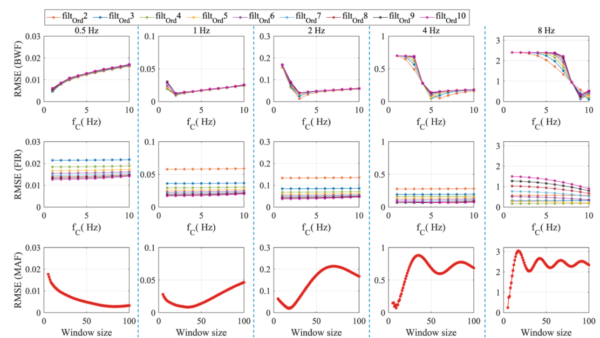
The research confirms that the sensor node can accurately estimate tilt and symmetry in real-time, suitable for resource-constrained hardware. The linear-phase FIR filter proved most effective, achieving the lowest RMSE while preserving waveform integrity. Experimental tests on non-cracked and cracked specimens validated the system’s ability to quantify asymmetry through lateral acceleration measurements.
Vertical acceleration measurements closely matched those reconstructed from displacement data, with peak deviations around 9-14%. Tilt derived from acceleration data aligned with displacement-based measurements, with minor underestimation at lower amplitudes. These findings highlight the practicality of the integration-free approach for MEMS-based SHM, offering a scalable, low-power solution that avoids big data challenges.
Future Directions and Broader Impact
This research represents a significant advancement in MEMS-based structural health monitoring, providing a practical solution for real-time tilt and symmetry estimation without double integration. Its scalability and low power requirements make it ideal for widespread deployment in various structural environments. Future work could focus on further optimizing filtering algorithms and expanding the system’s applicability to other fields, such as seismic monitoring and geotechnical assessments.
We appreciate the authors’ valuable contributions to the field. For insights or collaboration opportunities, please contact the research team.
Reference: Ghaderiaram, A., Eschlangen, E., & Fotouhi, M. (2026). On-Device tilt and symmetry sensing with a MEMS Accelerometer: An Integration-Free embedded approach. Measurement: Journal of the International Measurement Confederation, 271, Article 120992. DOI: https://doi.org/10.1016/j.measurement.2026.120992