
Researchers have explored using waste bamboo and seashells in non-structural concrete to combat urban noise pollution. This study enhances acoustic insulation and aligns with sustainability goals by valorizing waste materials, offering a promising solution for urban environments seeking to improve livability and environmental impact.
Urban Noise Pollution: A Growing Challenge
Urban noise pollution is a rising concern as cities expand. Primarily from traffic, construction, and industry, it is the second most significant environmental health stressor after air pollution. Prolonged exposure to noise over 75 dB can cause health issues like sleep disturbances and cardiovascular diseases. It also disrupts wildlife communication and reproduction. Residents near airports, highways, and construction zones often face noise levels exceeding 90 dB. Traditional buildings often lack adequate noise control, necessitating innovative material solutions to enhance acoustic comfort and urban livability.
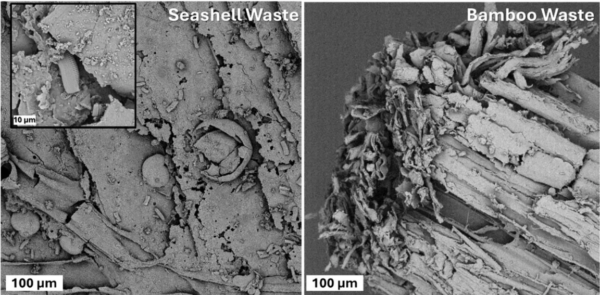
Concrete, a construction staple, has sound insulation properties influenced by its density and composition. Dense concrete reflects noise, while lighter mixes absorb sound, reducing transmission. Aggregate type, pore structure, and mix design significantly influence acoustic performance. Advancements in fibrous composites, lime-cement mortars, and recycled materials show promise in enhancing concrete’s acoustic properties while addressing sustainability. Traditional concrete density ranges from 2200 to 2500 kg/m³, but there’s a trend toward lightweight materials to reduce material consumption and greenhouse gas emissions, offering benefits like lower transportation costs and improved energy efficiency.
Exploring Sustainable Concrete Solutions
This study explores using waste bamboo and seashells as alternative fillers in thin-layer non-structural concrete. The primary goal is to enhance acoustic insulation while maintaining structural integrity. Incorporating these natural waste materials supports circular waste management and offers a sustainable pathway to improve concrete properties. Bamboo, with its high strength-to-weight ratio and hollow structure, enhances concrete’s flexural toughness and sound absorption. Seashells, rich in calcium carbonate, contribute to concrete’s strength and durability. Their extraction and processing result in lower greenhouse gas emissions compared to synthetic alternatives, enhancing environmental benefits.
The study introduces a comparative approach by investigating concrete systems with 0%, 5%, and 10% replacement levels. Mechanically pulverized seashells replaced fine aggregates, while NaOH-treated bamboo fibers replaced coarse aggregates. The control concrete, with 0% replacement, served as the baseline. Each mix was engineered to enhance acoustic insulation while maintaining structural integrity for urban sound-barrier applications.
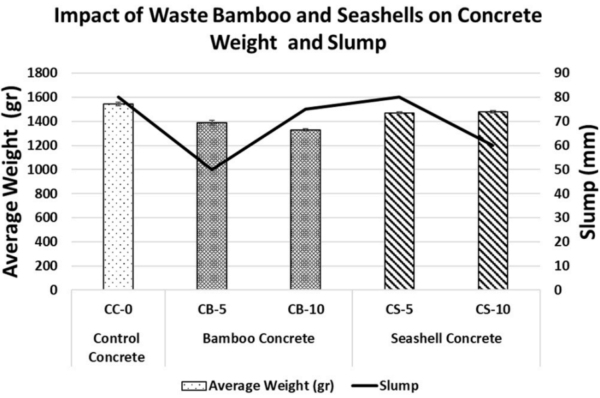
The methodology involved evaluating various mix designs through physical, microstructural, and an acoustic measurement setup simulating thin-walled structures. Results showed bamboo reduced compressive strength by up to 44.6% but improved sound attenuation at higher concentrations. Seashell incorporation showed minor improvements in compressive strength and noise reduction, particularly at the 10% replacement level. Acoustic performance metrics indicated up to 9 dB greater attenuation compared to conventional concrete. These findings demonstrate the potential of bamboo and seashell in concrete for sustainable, cost-effective sound barriers in urban settings.
The environmental assessment revealed that this approach diverts 120–240 kg of waste per cubic meter while achieving modest carbon footprint improvements, supporting circular economy principles in construction materials. The study highlights the potential of integrating waste bamboo and seashells as partial aggregate replacements in non-structural concrete applications, such as partitions, interior panels, and noise barrier facings. These contexts allow for moderate strength reductions as acceptable trade-offs for improved acoustic performance.
The research advances concrete technology by valorizing abundant waste streams and mitigating urban noise pollution. Bamboo waste, generated in large volumes in tropical and subtropical regions, poses environmental risks when disposed of through open burning or landfilling. Seashell waste, largely discarded by seafood and aquaculture industries, creates odor and contamination challenges in coastal communities. By integrating these wastes into concrete, the study addresses environmental concerns and enhances concrete’s acoustic properties, offering a sustainable solution for urban environments.
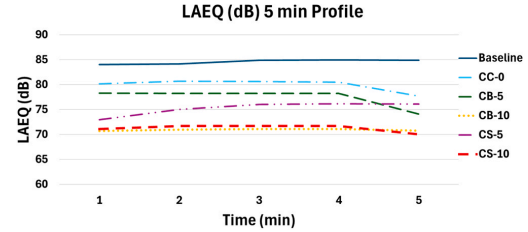
In conclusion, this research presents a promising pathway for sustainable urban noise mitigation through the innovative use of waste bamboo and seashells in concrete. By enhancing acoustic insulation and supporting circular waste management, the study offers a valuable contribution to the field of sustainable construction materials. We extend our gratitude to the authors for their work and encourage readers to explore these innovative solutions in their projects.
Reference: Shima Taheri, Santosh Sapkota, Ali Moghimi, Nariman Saeed, “Valorization of waste bamboo and seashells in thin-layer non-structural concrete for urban noise mitigation: Mechanical, acoustic, and environmental assessment,” Next Sustainability, 2026. DOI: https://doi.org/10.1016/j.nxsust.2026.100285