Lars Langhorst

Advancing 3D Land Administration with Point Clouds

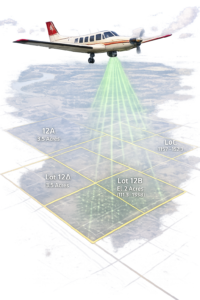
Discover how researchers are transforming urban land administration by integrating cadastral floor plans with nationwide airborne LiDAR to create detailed 3D point clouds, offering a cost-effective alternative to BIM for visualizing legal property boundaries in complex vertical structures—paving the way for scalable digital twins. The Challenge of Vertical Urbanization in Land Administration Urban areas are […]

Advancing 3D Land Administration with Point Clouds Read More »
Shanghai’s 30-Year Land Subsidence Evolution

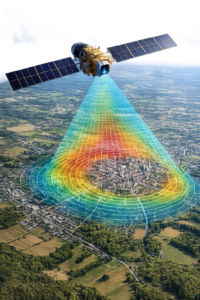
Dive into Shanghai’s sinking secrets: This study fuses 30 years of multi-sensor satellite data with AI modeling to map subsidence shifts from urban cores to coastal zones, revealing how groundwater management curbs rates and offers strategies for flood-resilient cities. The Subsidence Challenge Land subsidence in coastal megacities like Shanghai endangers infrastructure, increases flood risks, and

Shanghai’s 30-Year Land Subsidence Evolution Read More »

Unlocking 3D Printed Concrete

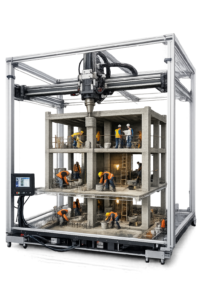
Dive into the Mechanics: How Printing Shapes Concrete’s Strength and Reliability in a Groundbreaking Interlaboratory Effort Spanning 30 Labs Worldwide Why Mechanical Properties in 3DCP Are Critical 3D concrete printing facilitates efficient, sustainable construction, but variable mechanical properties challenge structural reliability. As applications expand internationally, this variability hinders code compliance and broader implementation, affecting engineers,

Unlocking 3D Printed Concrete Read More »

Advancing Road Inspections with Drones and AI

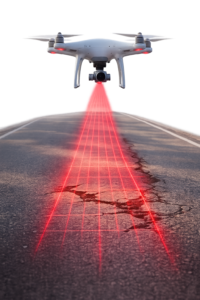
What if engineers could scan entire road networks from the air and spot damage early, quickly, and safely? With drones and AI working together, pavement inspection is beginning to move from boots on the ground to intelligence in the sky. Here’s how UAV imagery and the YOLOv7 deep learning model support faster, safer, and more

Advancing Road Inspections with Drones and AI Read More »

Indoor Positioning Using Augmented Reality

Imagine stepping into a smoke-filled building during an emergency, where every second counts and traditional navigation fails—yet augmented reality glasses reveal your precise location on a digital floor plan, guiding rescuers to safety. In his 2020 MSc thesis, Laurens Oostwegel pioneered a solution using the Microsoft HoloLens to combat SLAM’s drift errors through continuous spatial

Indoor Positioning Using Augmented Reality Read More »

Green Corridors as Blueprints for Sustainable Port-Cities

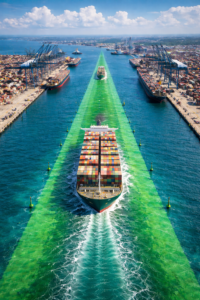
Forging “Zero-Emission Highways of the Sea”: New research maps how international collaboration between ports, cities, and industries is creating the first viable pathways to decarbonize global maritime trade. Zero-Emissions Shipping, in our cities and backyards Maritime shipping is the backbone of global trade but a major source of greenhouse gases, with emissions projected to surge

Green Corridors as Blueprints for Sustainable Port-Cities Read More »

The Great Fuel Cell Race: Which Hydrogen Technology Will Power Our Ships?

New research cracks the code on what will decide the winner in the battle to decarbonize shipping. For the first time, a systematic study reveals the key to dominance isn’t just technology—it’s cost. Why we must tackle maritime pollution, quickly The maritime industry is a massive polluter. To meet climate goals, it must ditch fossil

The Great Fuel Cell Race: Which Hydrogen Technology Will Power Our Ships? Read More »

The Secrets behind Flexible Fluid-Structure Interaction (FFSI)

For the first time, six major ocean engineering challenges—from ship hydroelasticity to wave-mud interactions—are woven into a single, structured modelling framework, providing engineers a roadmap to predict how flexible structures and the sea influence each other. Why This Is Important From massive ships bending in waves to seagrass swaying in currents, the ocean is a

The Secrets behind Flexible Fluid-Structure Interaction (FFSI) Read More »