Civil Engineering

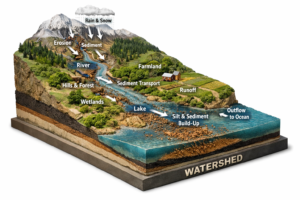
Why Are Some Watersheds More Sediment-Productive Than Others? An Explainable AI Approach

High-frequency turbidity sensors from 134 USGS stations, paired with RUSLE erosion estimates and explainable random forest models, map sediment yield and delivery ratios across the contiguous United States, revealing that human-modified landscapes dominate sediment transport efficiency while natural factors control total production, and highlighting priority sub-basins for targeted management in the Upper Mississippi and Chesapeake […]

Why Are Some Watersheds More Sediment-Productive Than Others? An Explainable AI Approach Read More »

Bidirectional LSTM Networks Enable High-Resolution Railway Track Stiffness Monitoring from Drive-By Vibrations

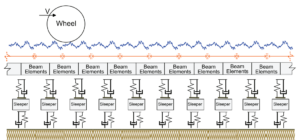
TU Delft researchers present an LSTM-BiLSTM architecture that combines sleeper-level framing of axle-box acceleration signals with LSTM-based temporal feature extraction and bidirectional processing to deliver accurate, simultaneous estimation of railpad and ballast stiffness at individual sleeper resolution — even under realistic measurement noise. The Critical Need for Accurate Track Stiffness Monitoring Railway track stiffness is

Bidirectional LSTM Networks Enable High-Resolution Railway Track Stiffness Monitoring from Drive-By Vibrations Read More »

Monitoring Amsterdams Bridges with InSAR

A structured Delft–Amsterdam research collaboration integrates bridge typologies, expected failure mechanisms, and satellite viewing geometry to translate one-dimensional MT-InSAR measurements into practical damage indicators, demonstrating how regional-scale millimetre-level displacement data can support systematic structural evaluation of urban bridge networks. The Urban Bridge Monitoring Dilemma Across Europe and beyond, bridge networks are aging under increasing traffic

Monitoring Amsterdams Bridges with InSAR Read More »

Bamboo Solutions for Mangrove Restoration

In Demak, Indonesia, a pilot deployment of bamboo and PVC permeable structures paired with systematic low-cost monitoring uncovers detailed seabed dynamics on a subsiding coast, highlighting both challenges and opportunities for nature-based mangrove restoration in complex coastal environments. Coastal Erosion and Subsidence: The Urgent Need for Effective Mangrove Restoration Mangroves provide essential coastal protection against

Bamboo Solutions for Mangrove Restoration Read More »

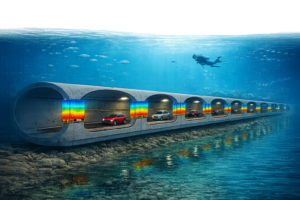
Revolutionizing Immersed Tunnel Monitoring: How Optical Fibers Reveal Seasonal Joint Movements

Seeing Tunnel Movements in a New Light For the first time, distributed optical fiber sensors (DOFS) have been used to continuously track how every joint along an immersed tunnel moves through the seasons. The results show—clearly and quantitatively—how temperature cycles drive joint opening and closing. For engineers responsible for aging tunnel infrastructure, this is a

Revolutionizing Immersed Tunnel Monitoring: How Optical Fibers Reveal Seasonal Joint Movements Read More »

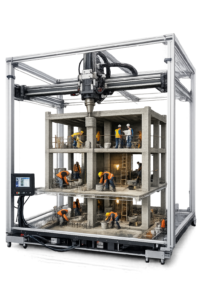
Unlocking 3D Printed Concrete

Dive into the Mechanics: How Printing Shapes Concrete’s Strength and Reliability in a Groundbreaking Interlaboratory Effort Spanning 30 Labs Worldwide Why Mechanical Properties in 3DCP Are Critical 3D concrete printing facilitates efficient, sustainable construction, but variable mechanical properties challenge structural reliability. As applications expand internationally, this variability hinders code compliance and broader implementation, affecting engineers,

Unlocking 3D Printed Concrete Read More »

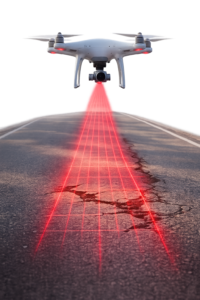
Advancing Road Inspections with Drones and AI

What if engineers could scan entire road networks from the air and spot damage early, quickly, and safely? With drones and AI working together, pavement inspection is beginning to move from boots on the ground to intelligence in the sky. Here’s how UAV imagery and the YOLOv7 deep learning model support faster, safer, and more

Advancing Road Inspections with Drones and AI Read More »