
3D-Printed Piezoelectric Metamaterials
Researchers have developed a framework for designing and 3D-printing piezoelectric truss metamaterials with customizable anisotropic responses.
3D-Printed Piezoelectric Metamaterials Read More »
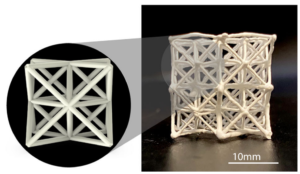
Researchers have developed a framework for designing and 3D-printing piezoelectric truss metamaterials with customizable anisotropic responses.
3D-Printed Piezoelectric Metamaterials Read More »

This study explores how LIDAR-assisted feedforward pitch control for floating offshore wind turbines uses upstream wind measurements to decrease structural load variations, resulting in reduced failure rates and operational expenditure savings of up to 11% across ScotWind sites, aiding the economic viability of deep-water renewable energy projects. Addressing Challenges in Floating Offshore Wind Floating offshore
LIDAR-Assisted Pitch Control Read More »
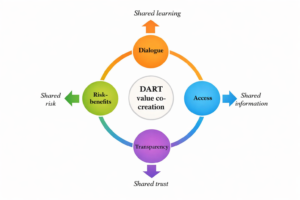
New research from TU Delft demonstrates how a Dutch digital platform for modular timber construction applies the DART co-creation framework to overcome the sector’s unique challenges of fragmentation, inefficiency and resistance to change, fostering stakeholder collaboration, transparency and scalable low-carbon practices. The construction industry accounts for approximately 40% of global energy use, around 30% of
Digital Platforms: Catalysts for Sustainability Transitions in Construction Read More »
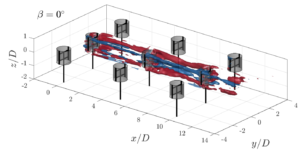
Enhancing Wake Recovery in Dense VAWT Arrays Explore this experimental study on regenerative wind farming, where vertical-axis wind turbines in a high-density grid employ vortex generator modes via blade pitching to entrain momentum, yielding available power increases of up to 6.4 times for downstream rotors and advancing efficiency in wind energy systems. Addressing Wake Losses
Regenerative Wind Farming Using Vertical-Axis Turbines Read More »
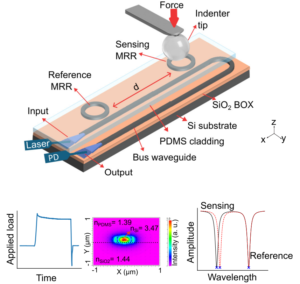
Explore the potential of silicon photonic microring arrays coated with PDMS to detect localized forces through elasto-optic shifts, offering real-time mapping at micrometer resolution on flat surfaces, ideal for unbiased cellular studies and advancing mechanobiology, soft-matter metrology, and tactile interfaces in a scalable, biocompatible format. Addressing Microscale Force Measurement in Soft and Biological Matter Measuring
Elasto-Optic Transduction in Polymer-Cladded Silicon Microrings for 2D Force Mapping Read More »
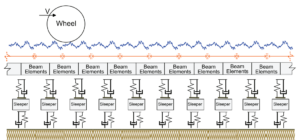
TU Delft researchers present an LSTM-BiLSTM architecture that combines sleeper-level framing of axle-box acceleration signals with LSTM-based temporal feature extraction and bidirectional processing to deliver accurate, simultaneous estimation of railpad and ballast stiffness at individual sleeper resolution — even under realistic measurement noise. The Critical Need for Accurate Track Stiffness Monitoring Railway track stiffness is
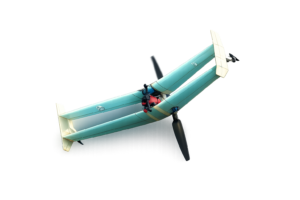
Researchers at Delft University of Technology have developed an analytical model that estimates fixed-wing UAV airspeed using only propeller power and rotational speed feedback from standard electronic speed controllers. This computationally efficient, model-free solution provides a practical alternative or redundancy to conventional Pitot tubes, achieving strong accuracy on real flight data. The Challenge of Reliable
UAV Airspeed Estimation using Propeller Feedback Read More »
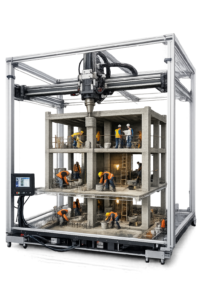
Dive into the Mechanics: How Printing Shapes Concrete’s Strength and Reliability in a Groundbreaking Interlaboratory Effort Spanning 30 Labs Worldwide Why Mechanical Properties in 3DCP Are Critical 3D concrete printing facilitates efficient, sustainable construction, but variable mechanical properties challenge structural reliability. As applications expand internationally, this variability hinders code compliance and broader implementation, affecting engineers,
Unlocking 3D Printed Concrete Read More »