
Infrastructure

Willow Forests as Natural Flood Defenses

A trade-off framework shows how riparian willow forests can support flood protection while maintaining biodiversity in delta landscapes. This study examines how different willow forest management strategies influence both wave attenuation and ecological value. By combining field measurements, ecological indicators and modelling, the research evaluates how riparian forests can contribute to hybrid flood defence systems

Willow Forests as Natural Flood Defenses Read More »

Navigating Lock-Ins in Grid Capacity Planning

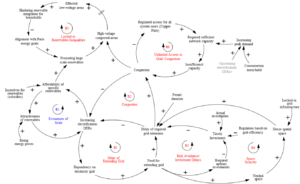
From Constraints to Adaptation: Lock-Ins in the Dutch Energy Transition This study examines socio-technical lock-ins in energy transitions, demonstrating how material, institutional, and behavioral constraints can prompt adaptive responses in distribution system operators, promoting flexibility and inter-actor collaboration to manage grid congestion and advance decarbonization in the Netherlands’ evolving energy infrastructure. Grid Congestion Challenges in

Navigating Lock-Ins in Grid Capacity Planning Read More »

BiOceanic Corridor Megaproject as the new Panama Canal?

Insights into Multi-National Infrastructure Management This study examines a configuration of seven interorganizational governance mechanisms across three levels in the BiOceanic Corridor program, addressing institutional complexities from diverse national environments in Brazil, Paraguay, Argentina, and Chile, extending prior research focused on single-institutional contexts. Challenges in Transnational Infrastructure Governance and Their Significance Transnational infrastructure megaprojects, such

BiOceanic Corridor Megaproject as the new Panama Canal? Read More »

Numerical Modeling of Tunnel Behavior Under Fire Exposure

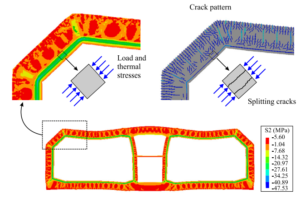
Unveiling Fire Effects on Tunnels: A Detailed Examination of Nonlinear Finite Element Strategies That Simulate Thermo-Mechanical Responses, Validating Models Against Large-Scale Tests to Inform Structural Assessments and Improve Design Practices in Reinforced Concrete Infrastructure – Essential Insights for Engineers. Addressing Tunnel Fire Risks: Significance for Structural Design Tunnel fires, although infrequent, can lead to significant

Numerical Modeling of Tunnel Behavior Under Fire Exposure Read More »

Expected Annual Damage European Coastal Transport Infrastructure Under Global Warming

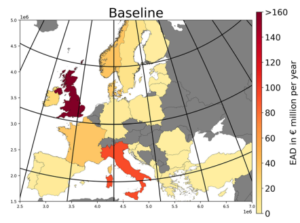
Probabilistic Assessment Reveals Escalating Damages from Rising Sea Levels This study evaluates coastal flood impacts on European road and rail networks across global warming scenarios, projecting baseline annual damages of €519 million rising potentially to €1,090 million at 4°C, with greater affected lengths for roads but higher costs for rails, signaling needs for targeted adaptation

Expected Annual Damage European Coastal Transport Infrastructure Under Global Warming Read More »

The Build Back Circular Framework

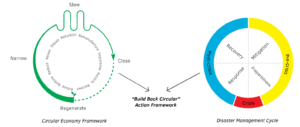
From Devastation to Resilience: Exploring Strategies for Sustainable Post-Disaster Reconstruction This research develops the Build Back Circular framework, integrating circular economy principles—narrowing, slowing, closing, and regenerating resource loops—into post-disaster recovery, with a focus on the 2023 Kahramanmaraş earthquakes in Türkiye, to promote resource efficiency, resilience, and inclusive urban development through ten actionable strategies and stakeholder

The Build Back Circular Framework Read More »

Deep Dive into Energy Geostructures

Drawing from a comprehensive database of 972 energy geostructure case studies spanning 27 countries and eight types, this analysis examines geographical trends, thermal performance metrics, design features, and CO₂ reduction potential, underscoring their role in integrating low-enthalpy geothermal energy into sustainable urban heating and cooling systems. Sustainable Urban Energy Challenges and the Relevance of Energy

Deep Dive into Energy Geostructures Read More »

Bidirectional LSTM Networks Enable High-Resolution Railway Track Stiffness Monitoring from Drive-By Vibrations

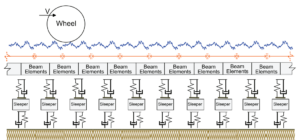
TU Delft researchers present an LSTM-BiLSTM architecture that combines sleeper-level framing of axle-box acceleration signals with LSTM-based temporal feature extraction and bidirectional processing to deliver accurate, simultaneous estimation of railpad and ballast stiffness at individual sleeper resolution — even under realistic measurement noise. The Critical Need for Accurate Track Stiffness Monitoring Railway track stiffness is

Bidirectional LSTM Networks Enable High-Resolution Railway Track Stiffness Monitoring from Drive-By Vibrations Read More »