Journal publication

Uncovering Links Between Forest Loss and Water Dynamics in the Amazon

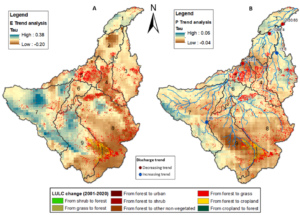
Explore the spatial and temporal shifts in precipitation, evaporation, and streamflow linked to deforestation in the Madeira River basin, the Amazon’s largest sub-basin, through analysis of satellite, reanalysis, and observed data from 1981 to 2016, highlighting significant correlations that inform regional water resource strategies. Deforestation Challenges in the Madeira River Basin The Madeira River basin […]

Uncovering Links Between Forest Loss and Water Dynamics in the Amazon Read More »
Morphological Evolution of the Lower Rhine

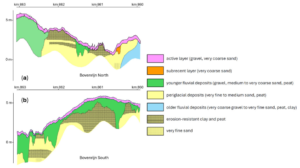
Exploring River Dynamics: A Review of Three Decades of Studies on Human-Induced Changes in the Lower Rhine, Emphasizing 2D Modeling for Transverse Sediment Variations, Bifurcation Stability, and Non-Erodible Layer Effects in Large-Scale Bed Profile Management Human Interventions in the Lower Rhine: Challenges and Significance The lower Rhine, including the Niederrhein in Germany and the delta

Morphological Evolution of the Lower Rhine Read More »

Flood Characteristics and Macroplastic Deposition in Rivers

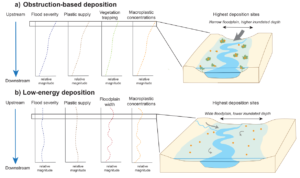
This study analyzes macroplastic deposition on river floodplains across 14 events, including five floods, along Dutch rivers, demonstrating higher deposition during severe floods and varying mechanisms based on flood type, offering valuable data for addressing riverine plastic pollution in environmental management. Understanding Macroplastic Pollution in Rivers Macroplastic pollution, plastic items larger than 5 mm, poses

Flood Characteristics and Macroplastic Deposition in Rivers Read More »

Remote Sensing for Oxbow Lake Monitoring in Turbid Floodplains

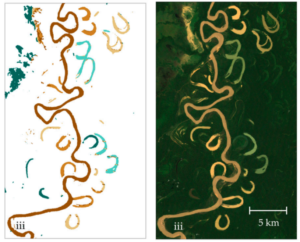
This study employs Google Earth Engine and Landsat 7 imagery alongside random forest classification to analyze multitemporal trends in oxbow lake area, water types, and hydrologic connectivity, providing insights into ecohydrological processes and fish habitat availability in data-scarce tropical river systems such as Bolivia’s Beni River. Challenges in Floodplain Dynamics Monitoring Meandering river floodplains, such

Remote Sensing for Oxbow Lake Monitoring in Turbid Floodplains Read More »

The Comprehensive Global Building Dataset: GlobalBuildingAtlas

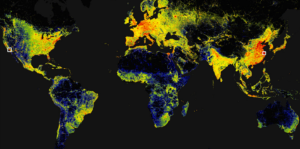
GlobalBuildingAtlas introduces an open dataset with global coverage of 2.75 billion building polygons, 3 m resolution height maps, and LoD1 3D models, derived from satellite imagery, offering enhanced detail for urban analysis, planning, and monitoring progress toward the UN’s Sustainable Development Goals. The Need for Detailed Global Building Information Buildings serve as the foundation of

The Comprehensive Global Building Dataset: GlobalBuildingAtlas Read More »

Monitoring Amsterdams Bridges with InSAR

A structured Delft–Amsterdam research collaboration integrates bridge typologies, expected failure mechanisms, and satellite viewing geometry to translate one-dimensional MT-InSAR measurements into practical damage indicators, demonstrating how regional-scale millimetre-level displacement data can support systematic structural evaluation of urban bridge networks. The Urban Bridge Monitoring Dilemma Across Europe and beyond, bridge networks are aging under increasing traffic

Monitoring Amsterdams Bridges with InSAR Read More »

Bamboo Solutions for Mangrove Restoration

In Demak, Indonesia, a pilot deployment of bamboo and PVC permeable structures paired with systematic low-cost monitoring uncovers detailed seabed dynamics on a subsiding coast, highlighting both challenges and opportunities for nature-based mangrove restoration in complex coastal environments. Coastal Erosion and Subsidence: The Urgent Need for Effective Mangrove Restoration Mangroves provide essential coastal protection against

Bamboo Solutions for Mangrove Restoration Read More »

Low-Cost SFCW Radar Platform Advances Sub-Daily Environmental Monitoring

Researchers have developed an affordable tower-mounted SFCW radar built around a compact SDR-based VNA and enhanced RF front end. Operating in L- and C-bands with dual polarization, the system captures high-temporal-resolution microwave data on soil, vegetation, and snow processes—directly addressing the temporal gaps that limit satellite observations of rapid Earth system dynamics. The Challenge of

Low-Cost SFCW Radar Platform Advances Sub-Daily Environmental Monitoring Read More »

Revolutionizing Immersed Tunnel Monitoring: How Optical Fibers Reveal Seasonal Joint Movements

Seeing Tunnel Movements in a New Light For the first time, distributed optical fiber sensors (DOFS) have been used to continuously track how every joint along an immersed tunnel moves through the seasons. The results show—clearly and quantitatively—how temperature cycles drive joint opening and closing. For engineers responsible for aging tunnel infrastructure, this is a

Revolutionizing Immersed Tunnel Monitoring: How Optical Fibers Reveal Seasonal Joint Movements Read More »

Machine Learning Meets Soil Dynamics

A data-driven review shows how modern machine-learning models consistently outperform traditional empirical equations in predicting soil shear modulus and damping ratio, offering geotechnical engineers a clearer, more efficient path to characterizing dynamic soil behavior while highlighting practical limitations, data requirements, and future research needs. Why Soil Dynamics Still Challenge Engineers Accurate characterization of soil dynamic

Machine Learning Meets Soil Dynamics Read More »