
Researchers Kelsey Barton-Henry and Leonie Wenz reveal the persistent impacts of hurricanes on economic recovery in the southern US using nighttime light data. Their study highlights limitations in current recovery efforts and underscores the necessity for improved disaster response strategies to address long-term recovery challenges.
The Ongoing Struggle: Hurricanes and Recovery
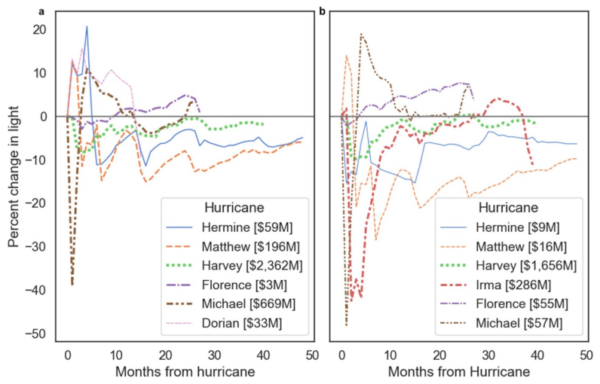
Hurricanes are among the most destructive natural disasters, causing extensive economic damage and displacing many individuals. While immediate impacts are well-documented, there is limited quantitative evidence on medium- to long-term recovery dynamics. This understanding gap is increasingly concerning as climate change intensifies weather events. The study by Kelsey Barton-Henry and Leonie Wenz examines the southern United States, frequently hit by hurricanes, to determine if affected areas fully recover over time.
Previous research indicates that hurricane recovery is a complex process influenced by socioeconomic and demographic factors. However, most studies focus on short-term effects or isolated events, leaving a gap in understanding the broader, long-term recovery landscape. This research addresses that gap by examining recovery patterns in areas affected by category 4 and 5 hurricanes from 2014 to 2020, using nighttime light data as a proxy for economic activity and population density.
The study also investigates the role of Federal Emergency Management Agency (FEMA) aid in recovery. While FEMA aid is vital for immediate relief, its effectiveness in fostering long-term recovery is uncertain. By analyzing FEMA aid’s impact at both household and public entity levels, the researchers aim to identify key factors influencing recovery dynamics and inform future disaster aid policies.
Illuminating Recovery: Nighttime Light Data
The researchers utilized Visible Infrared Imaging Radiometer Suite (VIIRS) nighttime light (NTL) data to track recovery patterns. Nighttime light data, correlating with economic activity and population density, offers a detailed view of recovery dynamics across affected regions. By constructing a recovery timeline through changes in NTL radiance levels, the researchers assessed hurricanes’ long-term impact on economic activity.
To isolate hurricanes’ effects on NTL radiance, the researchers applied a quasi-experimental method known as difference-in-differences (DiD). This method compares changes in NTL radiance levels between affected and unaffected counties, accounting for other trends and events that could influence radiance levels. This approach allowed the researchers to estimate hurricanes’ causal effects on changes in night light intensity.
The study also incorporated machine learning techniques to identify factors contributing to recovery. By combining tree-based models with the Shapley Additive explanations algorithm (SHAP), the researchers determined the importance of various socioeconomic, demographic, and aid-related factors in explaining differences in recovery across counties. This approach provided a comprehensive understanding of post-hurricane recovery dynamics.
Revealing the Recovery Deficit
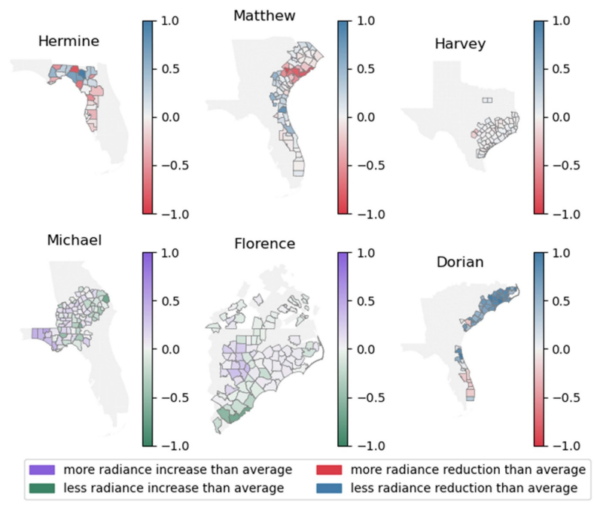
The study’s findings reveal a concerning trend: areas affected by category 4 and 5 hurricanes in the southern US generally do not achieve full recovery in the long term. After three years, affected regions exhibited a reduction in NTL radiance levels of between 2% and 14% compared to pre-disaster levels, indicating a persistent recovery gap that traditional metrics may overlook.
FEMA aid was found to play a significant role in short-term recovery, particularly for public entities. However, the aid did not lead to a complete return to normal radiance levels over time. The study also highlighted the importance of demographic factors, such as age and employment, in influencing recovery dynamics. These findings suggest that while aid is crucial for immediate relief, it is insufficient to guarantee long-term recovery.
Rethinking Disaster Recovery Strategies
This research underscores the need for a reevaluation of current disaster recovery strategies. The findings suggest that more targeted and sustained support is necessary to bridge the recovery gap and ensure long-term resilience in hurricane-prone areas. By identifying key factors that influence recovery, the study provides valuable insights for policymakers aiming to enhance disaster response and adaptation strategies.
As climate change continues to intensify weather events, understanding the long-term impacts of hurricanes is more critical than ever. This study serves as a call to action for researchers, policymakers, and aid organizations to collaborate in developing more effective recovery frameworks. For those interested in further exploring this research or contributing to future studies, the authors welcome engagement and input from the wider community.
Reference: Kelsey Barton-Henry and Leonie Wenz 2022 Environ. Res. Lett. 17 114015. DOI: https://doi.org/10.1088/1748-9326/ac998d