
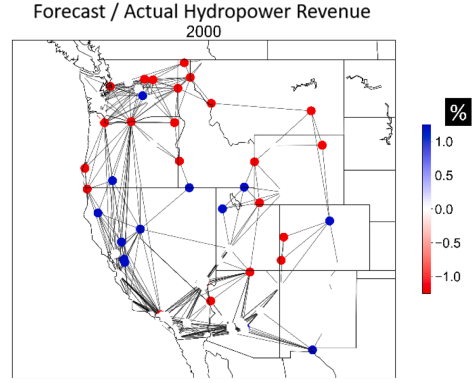
In electricity markets, the interplay between hydrologic forecasts and hydropower scheduling is vital. This study examines their impact on price forecasts, highlighting the importance of operational decisions in optimizing hydropower for better market predictions and efficiency.
The Complex Dynamics of Electricity Pricing
Wholesale electricity markets are complex ecosystems where price dynamics are primarily driven by the interplay of supply and demand. In regions where hydroelectric dams play a significant role, the timing and quantity of hydropower generation can significantly impact market prices, similar to the influence of wind and solar power. However, unlike these renewable energy sources, hydropower supply is intricately linked to both water availability and operational decisions at the dams. This dual dependency introduces a unique challenge: predicting electricity prices accurately in markets dominated by hydropower.
Operators of hydroelectric dams aim to maximize revenue by aligning their power generation schedules with periods of high market prices. This strategic scheduling can inadvertently lead to price forecast errors, posing a significant challenge for market participants. The research delves into the relative importance of two critical types of information for predicting forward electricity prices: hydrologic forecasts, which provide data on water availability, and the hourly scheduling decisions made by dam operators. Understanding the influence of these factors is vital for optimizing hydropower scheduling and improving price forecasts, ultimately enhancing market efficiency and reliability.
Innovative Research Methodology
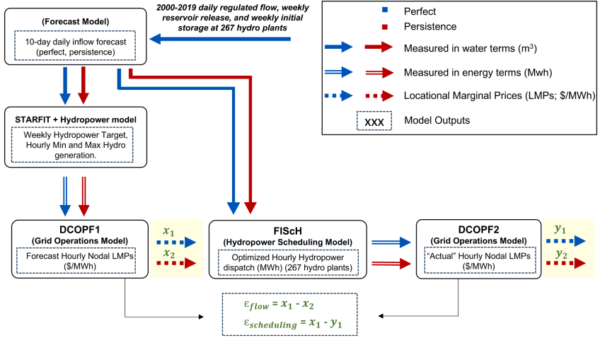
The research employs a sophisticated approach to unravel the complexities of hydropower scheduling and its impact on electricity price forecasts. The study utilizes a combination of hydrologic, hydropower scheduling, and power systems models, focusing on the U.S. Western Interconnection. This region, with its extensive network of 267 dams, serves as an ideal testing ground for the research.
Two sets of weekly streamflow data, labeled as “perfect” and “persistence” forecasts, are used to simulate reservoir inflows. The “perfect” forecasts represent actual streamflow, while “persistence” forecasts assume a naive approach, projecting that inflows remain constant over a week based on the previous day’s data. These forecasts, alongside historical data on load, wind, and solar power, are fed into a direct current optimal power flow (DCOPF) model. This model generates hourly electricity price forecasts by optimizing hydropower generation schedules to minimize global system costs.
To assess the impact of hydropower scheduling on price forecasts, the study employs a dynamic programming model. This model optimizes hourly hydropower generation to maximize revenue while adhering to water management objectives. The optimized schedules are then fed back into the DCOPF model to simulate “actual” market prices, allowing the researchers to compare the influence of streamflow forecast errors and hydropower scheduling decisions on electricity prices.
Key Findings and Conclusions
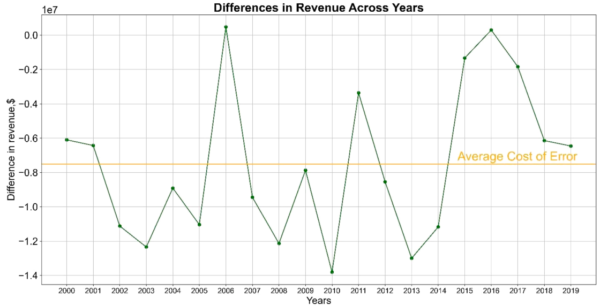
The findings of the research are both revealing and significant. The study concludes that the alignment of hydropower generation schedules with periods of high forecasted prices results in larger, inadvertent price forecast errors compared to errors stemming from imperfect hydrologic forecasts. This indicates that the knowledge of how water is managed by dam operators within a week is more crucial than weekly inflow forecast errors when predicting forward electricity prices.
The research highlights the critical role of hydropower scheduling decisions in influencing market prices. By optimizing generation schedules to align with high market prices, dam operators can inadvertently create discrepancies between forecasted and actual prices. This underscores the need for a nuanced understanding of both hydrologic forecasts and operational decisions to improve electricity price predictions in hydropower-dominated markets.
Future Directions and Implications
The implications of this research are profound for regions where hydropower plays a dominant role in electricity markets. By emphasizing the importance of hydropower scheduling decisions, the study provides valuable insights for optimizing hydropower operations and improving market efficiency. Future research could explore the integration of advanced forecasting techniques and real-time data analytics to further enhance price predictions and operational strategies.
Reference: Henry Ssembatya, Jordan D. Kern, Nathalie Voisin, Scott Steinschneider, Daniel Broman. “The relative influences of hydrologic information and dams’ hydropower scheduling decisions on electricity price forecasts.” DOI: https://doi.org/10.1016/j.egyr.2026.109203