
Exploring the dynamic interplay between urban vulnerability and resilience, researchers at Delft University of Technology reveal how heatwaves challenge conventional wisdom. Their study uncovers surprising temporal patterns in heatwave responses across cities, urging a rethink of urban planning and resilience strategies.
Urban Heatwaves: A Growing Concern
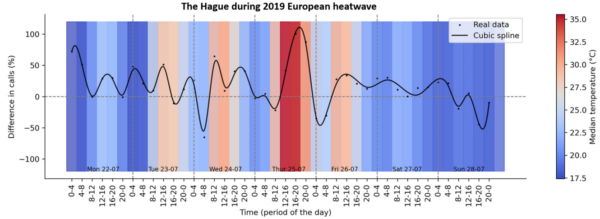
Urban heatwaves are increasingly becoming a pressing concern, exacerbating existing societal vulnerabilities and testing the adaptive capacities of both citizens and urban systems. The 2019 European heatwave, which led to over 400 deaths in the Netherlands alone, serves as a stark reminder of the severe health impacts associated with extreme heat events. These events are often intensified in urban areas by the Urban Heat Island (UHI) effect, which, coupled with structural inequalities, amplifies health emergencies.
Urban vulnerability and resilience are central concepts in understanding how cities cope with such stressors. Vulnerability refers to the susceptibility of urban systems to adverse effects, encompassing sensitivity, exposure, and adaptive capacity. In contrast, resilience is the ability of these systems to recover and maintain functionality under stress. Traditional approaches to assessing heat vulnerability often rely on static spatial analyses, potentially overlooking the dynamic nature of vulnerability and resilience as they fluctuate over time and space.
This study, conducted by researchers Mikhail Sirenko, Tina Comes, and Alexander Verbraeck, addresses these gaps by examining the spatio-temporal dynamics of urban vulnerability and resilience during heatwaves. Their research focuses on the critical response phase, analyzing short-term adaptivity and responsiveness to immediate heat stress impacts. By doing so, they aim to provide a more nuanced understanding of how urban systems can better adapt to extreme heat events.
Tracking Heatwave Responses: A Novel Approach
The research team employed an analytical framework to investigate the dynamics of urban vulnerability and resilience during the 2019 European heatwave. Focusing on the three largest cities in the Netherlands—Amsterdam, Rotterdam, and The Hague—they combined hour-by-hour ambulance call data with district profiles derived from demographic, socioeconomic, health, and built environment attributes.
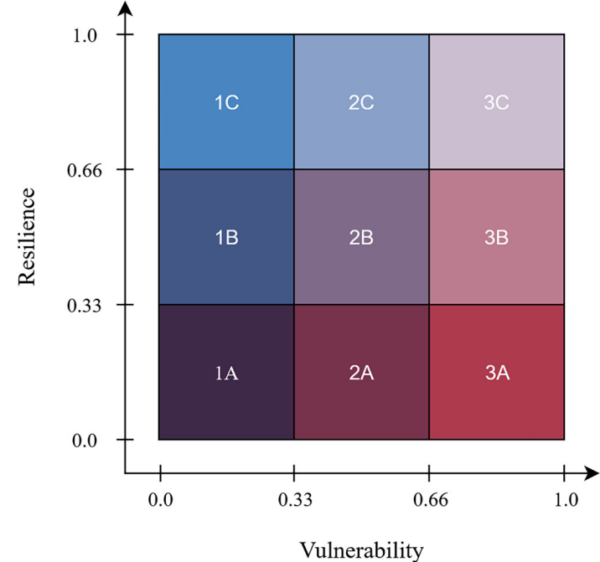
To operationalize resilience dynamically, the researchers used patterns of ambulance calls as a proxy for acute health impacts and citizens’ immediate response capacity under heat stress. This dynamic resilience proxy was analyzed alongside spatial patterns of vulnerability identified through Non-Negative Matrix Factorisation (NMF). NMF allowed the team to identify dominant combinations of features within districts, such as ‘elderly and low-income’ or ‘single-parent living in an urban heat island,’ which were then classified according to heat vulnerability literature.
The study’s methodology highlights the importance of considering both the ‘urban fabric’—the physical city composed of buildings, streets, infrastructure, and green/blue spaces—and the ‘urban social fabric’—the social elements and activities shaped by the physical environment. By examining these interplays, the researchers aimed to capture the dynamic nature of vulnerability and resilience, which are often overlooked in static assessments.
Unveiling Temporal Resilience Patterns
The study’s findings reveal significant temporal variations in resilience patterns across the three cities during the heatwave. The number of ambulance calls increased by 20% above the summer weekly average during the heatwave week, with the hottest day on record, July 25, 2019, seeing dramatic spikes in calls: 41% in The Hague, 31% in Rotterdam, and 27% in Amsterdam.
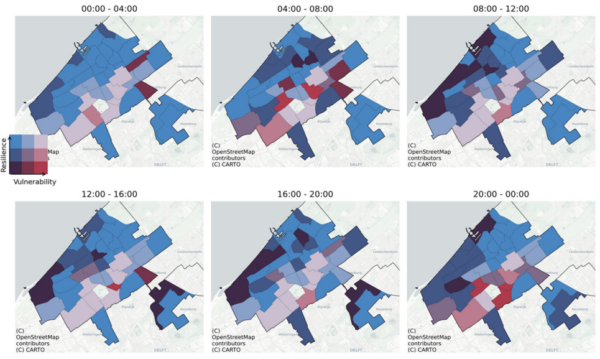
Distinct hourly patterns emerged across the cities, underscoring the dynamic nature of urban environments. For instance, The Hague experienced the highest average increase during the noon interval, while Amsterdam’s peak occurred in the early evening. These variations highlight the importance of considering temporal dimensions when assessing urban resilience, as exposure to heat changes based on daily activities and locations.
The research posits that the temporal dynamics of city-specific urban social fabric and corresponding vulnerabilities lead to different temporal patterns of heatwave resilience. This insight challenges the conventional view of vulnerability as a static, spatial phenomenon and emphasizes the need for dynamic, context-aware planning.
Shaping Future Urban Strategies
The study’s findings have significant implications for urban planning and policy-making. By demonstrating the importance of temporal dynamics in understanding urban resilience, the research calls for context-aware tools that treat resilience and vulnerability as intertwined, shifting properties of the urban social fabric. This approach can inform more effective urban sustainability and climate adaptation strategies, ultimately enhancing cities’ ability to cope with extreme heat events.
As the world continues to grapple with the impacts of climate change, this research provides valuable insights into the complex interplay between urban vulnerability and resilience. The authors invite further refinement, adaptation, and discussion of their findings across diverse contexts, encouraging collaboration and innovation in the pursuit of resilient urban futures.
Reference: Sirenko, M., Comes, T., & Verbraeck, A. (2026). Urban heatwaves reverse vulnerability-resilience relationships throughout the day. npj Urban Sustainability, 6(1), Article 22. DOI: https://doi.org/10.1038/s42949-025-00327-4