
Researchers highlight the critical role of transparency and reusability in climate risk management, revealing that only a small fraction of studies fully share their data and code. This gap between principles and practice underscores the need for improved foundational practices in this essential field.
Why Transparency Matters in Climate Risk Management
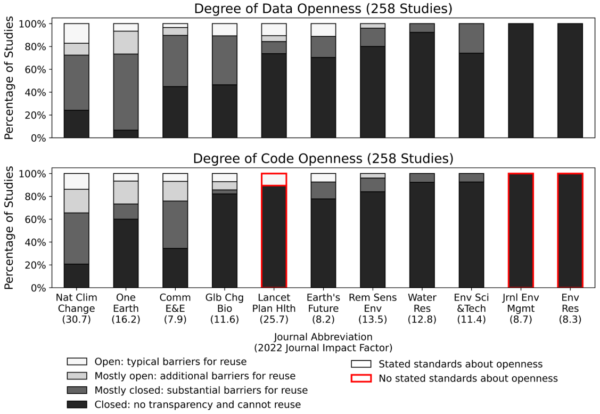
Climate risk projections are crucial for decision-making in various sectors, from guiding homebuyers to informing government funding allocations. However, the reliability of these projections is questioned due to data limitations and validation challenges. Pollack et al. address these issues, noting that many projections claim to solve problems beyond current scientific understanding. The process involves estimating weather probabilities, translating them to hazards, and assessing damages. The main reliability concerns arise from estimating weather probabilities, which are difficult to verify in open, nonstationary systems. Data constraints further complicate the evaluation of hazard and impact models against historical data.
An example from the study highlights discrepancies in flood risk projections. In Los Angeles, two flood hazard models showed only 24% agreement on properties within the 100-year floodplain. This inconsistency, along with limited historical data on flooding and property damage, makes it difficult to determine the superior model. Even with sufficient observations, uncertainties like natural climate variability complicate confirming observed events corresponding to the 100-year floodplain. These challenges emphasize the importance of transparency and reusability in climate risk research, enabling scrutiny of assumptions, datasets, and methods to foster a more reliable climate knowledge ecosystem.
Bridging the Gap: From Theory to Practice
Pollack and colleagues conducted an in-depth analysis of the most-cited climate risk studies from 2021 to 2022 to assess transparency and reusability. They found that only four percent of these studies fully shared their data and code, despite journal requirements for transparency. This lack of openness highlights a disconnect between stated principles and actual practice. Transparency allows others to assess assumptions, datasets, and methods, while reusability facilitates model combination, building on existing work, and conducting intercomparison projects. Successful examples include the Coupled Model Intercomparison Project (CMIP) and the Dynamic Integrated Climate-Economy (DICE) model, which have advanced research through transparent assumptions and reusable code.
Current State and Future Directions
The research findings reveal a concerning state of climate risk research, with only a small fraction of studies meeting transparency and reusability standards. This lack of openness does not undermine the overall findings of climate research but indicates a need for improvement in foundational practices. The study concludes that transformative progress requires substantial investment, cross-sector collaboration, and careful consideration of trade-offs, data rights, and multiple perspectives on equity. The authors hope their perspective will accelerate immediate actions and longer-term conversations to enhance the ability of science to support timely, evidence-based, and sound climate risk management.
A Call to Action for the Research Community
The implications of this research are significant, highlighting the need for a cultural shift towards greater transparency and reusability in climate risk research. By embracing these principles, the climate-risk information ecosystem can be strengthened, enabling faster and more reliable progress in understanding and managing climate risks. The authors call for substantial investment and collaboration across sectors to address the challenges identified in their study. They emphasize the importance of open data ecosystems and open-source risk assessments to advance science and support private sector services. By doing so, the research community can better fulfill its foundational role in the climate risk ecosystem.
Reference: Pollack, A. B., Auermuller, L., Burleyson, C. D., Campbell, J., Coronese, M., Doss-Gollin, J., Hegde, P., Helgeson, C., Kwakkel, J., & More Authors (2026). Unlocking the benefits of transparent and reusable science for climate risk management. Proceedings of the National Academy of Sciences of the United States of America, 123(3), e2422157123. DOI: https://doi.org/10.1073/pnas.2422157123