
Researchers from Delft University of Technology and Queen Mary University of London have utilized 3D X-ray microtomography to explore river floc dynamics. This study provides insights into sediment management in aquatic environments, enhancing understanding of floc behavior and its implications for sediment transport and environmental conservation.
Unraveling the Complexity of Sediment Flocs
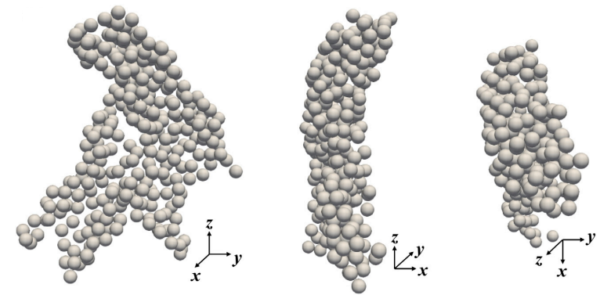
Natural sediment flocs, highly porous aggregates of biogenic and minerogenic materials, are crucial in the suspended sediment load of rivers, estuaries, and marine environments. These flocs play a significant role in transporting sediments, nutrients, carbon, and pollutants, impacting aquatic industries, waterway maintenance, and ecosystem conservation. However, predicting the dynamics and settling behavior of these fine sediments remains challenging.
The complexity arises from the highly variable nature of suspended particulate matter (SPM) in natural water bodies. Fine sediments, primarily composed of clays and silts, aggregate into loosely bound, irregular flocs. These flocs, which include inorganic particles, organic matter, and microbial organisms, are difficult to model due to their fragile and irregular nature. Traditional models often fail to capture the dynamics of these flocs accurately, leading to poor predictions of cohesive sediment behavior.
One key parameter in understanding floc dynamics is the settling velocity, which depends on the floc’s diameter, shape, density, and porosity. Traditionally, these parameters have been estimated using two-dimensional observations, assuming spherical shapes. However, natural flocs are far from spherical, and their irregular shapes can significantly impact their settling behavior. This discrepancy has led to a gap in accurately modeling the fate and behavior of fine-grained sediments in aquatic environments.
Advanced Methodology for Floc Analysis
The research team employed 3D X-ray microtomography to capture the complex geometry of natural sediment flocs. They focused on three millimeter-sized flocs sampled from the Thames River, converting these X-ray images into digital geometries. These geometries were then used in Stokesian Dynamics calculations to analyze the hydrodynamic properties of the flocs.
Unlike previous studies that relied on synthetic fractal structures, this research utilized real floc geometries. Each floc was represented as a rigid ensemble of spherical beads moving in the creeping flow regime. This method allowed the researchers to compute several critical parameters, including the hydrodynamic radius, floc mobility and resistance tensors, and the relationship between sedimentation velocity and fractal dimension.
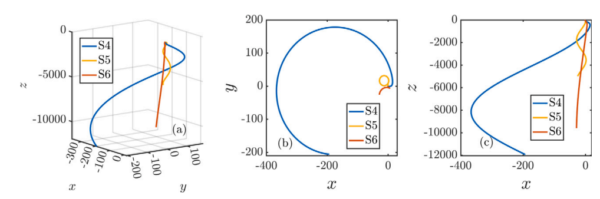
One of the study’s advancements was the analysis of the coupling between gravitational forces and lateral velocities. By examining the cross-components of the mobility matrix, the researchers discovered that flocs exhibit a helical motion as they settle. This lateral motion could enhance floc-floc aggregation through differential sedimentation, increasing the effective collisional area.
Key Findings and Insights
The simulations revealed significant differences in the settling dynamics of the three flocs, despite their similar gross shapes. The study demonstrated that the coupling of gravitational forces with lateral velocities leads to a helical motion during settling. This finding challenges the conventional assumption that the fractal dimension of a floc affects only its effective weight and not its hydrodynamic resistance.
Furthermore, the research highlighted the importance of characterizing the resistance and mobility matrices of flocs. These matrices are intrinsic properties that depend solely on the size and shape of the floc, providing valuable insights into their settling behavior. The study exemplifies how high-resolution X-ray techniques, coupled with accurate particle-resolved simulations, can enhance our understanding of the settling dynamics of real flocs collected from various aquatic environments.
Future Directions and Impact
This research opens new avenues for accurately modeling and predicting the behavior of fine-grained sediments in aquatic environments. By providing a deeper understanding of floc dynamics, the study offers valuable insights for the management of natural water bodies and associated industries. The findings could lead to improved models for sediment transport, enhancing our ability to predict the distribution and fate of fine sediments and contaminants.
Reference: Gu, C., Li, H., Spencer, K. L., & Botto, L. (2026). Sedimentation and resistance tensor of a river floc from 3D X-ray microtomography. International Journal of Multiphase Flow, 196, Article 105586. DOI: https://doi.org/10.1016/j.ijmultiphaseflow.2025.105586