
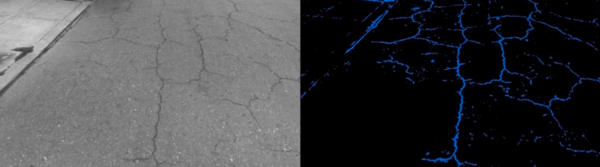
Researchers have developed a deep learning-based methodology for detecting and evaluating pavement surface damage. This approach enhances road safety and maintenance strategies by providing accurate, scalable, and objective assessments of pavement conditions, offering a flexible solution for infrastructure monitoring and reducing traditional inspection limitations.
Addressing Road Infrastructure Challenges
Road infrastructure is crucial for the safety and efficiency of land transportation. Poor road conditions can increase accident risks, vehicle operating costs, and disrupt mobility. Pavement damage, such as cracks and potholes, if unaddressed, leads to higher maintenance costs and severe structural failures. Traditional road inspections rely on manual methods, including visual assessments by experts or data collection using survey vehicles with sensors and cameras. These methods, while informative, are labor-intensive, time-consuming, and subjective, with varying interpretations of damage severity. Additionally, specialized vehicles and sensors are costly and logistically challenging, limiting road assessment frequency and coverage.
This study introduces a deep learning-based framework for automated pavement damage detection and evaluation, addressing the limitations of conventional methods and current public datasets. A key contribution is the PavementDamagesG-7 dataset, a high-resolution collection of 920 stereo-based images covering various distress types and illumination conditions. Unlike existing datasets, PavementDamagesG-7 captures a broader range of surface damage types under diverse environmental conditions, making it ideal for training and evaluating semantic segmentation models.
Innovative Research Methodology
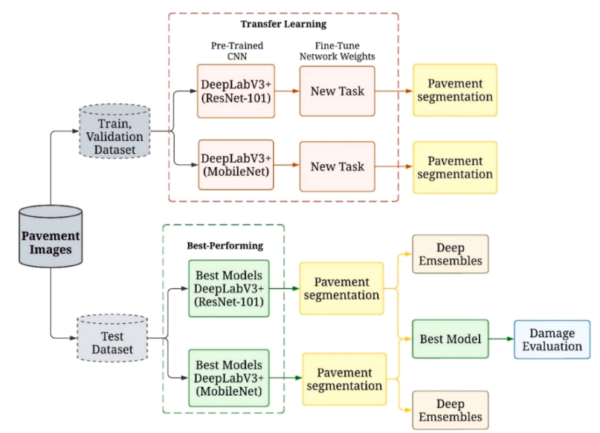
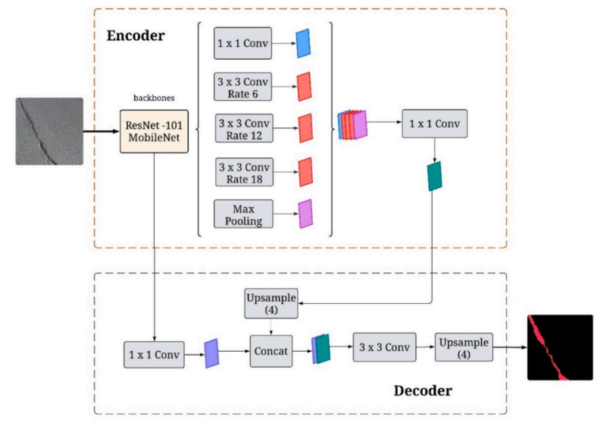
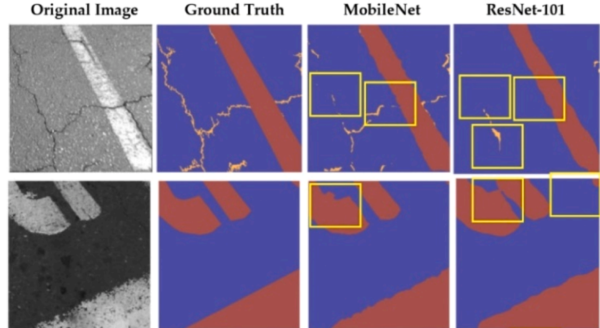
The researchers utilized state-of-the-art deep learning models, specifically DeepLabV3+ with ResNet-101 and MobileNet backbones, for semantic segmentation and evaluation of pavement distress. These models were fine-tuned using Optuna for hyperparameter optimization, improving performance by addressing challenges from image variability, noise, and road surface complexities. Segmentation focused on four classes: cracks, potholes, alligator cracking, and pavement marking. The MobileNet backbone achieved a mean Intersection over Union (mIoU) of 89.25% and an F1-Score of 92.09%.
The study also integrated Deep Ensembles to assess model uncertainty and improve interpretability, applied to top-performing models to evaluate spatial coherence and boundary precision. This analysis identified regions with higher predictive uncertainty, offering insights into the model’s confidence levels across different damage types. This is crucial for complex patterns, such as cracks, where uncertainty estimation can highlight ambiguous areas needing further attention or post-processing.
Additionally, the study emphasizes damage evaluation using the Pavement Condition Index (PCI) methodology. Segmented damage types were assessed following PCI guidelines, quantifying damages by type, severity, and extent. This approach bridges image-based analysis with standardized engineering evaluation, supporting reproducible and scalable road assessments.
Key Findings and Implications
The methodology demonstrated high consistency with manual PCI assessments, particularly for localized damage. The model effectively adjusted the evaluation area to the actual damage extent, offering a flexible and scalable solution for infrastructure monitoring. The integration of PCI scoring provided a consistent framework to translate pixel-level segmentation results into practical infrastructure metrics, quantifying damage in terms of spatial extent, severity, and impact.
Overall, the study presents a scalable and robust solution for pavement monitoring, offering spatially accurate segmentation and quantifiable damage evaluation. By reducing subjectivity and operational overhead compared to traditional inspection methods, this approach provides transportation agencies with a cost-effective and objective tool for pavement monitoring.
Future Prospects in Smart Infrastructure
This research establishes a scalable foundation for digital inspection and smart infrastructure management. The proposed framework offers a valuable tool for transportation agencies, especially where conventional assessments are constrained by time, cost, or subjectivity. The PavementDamagesG-7 dataset enhances the potential for developing robust models capable of handling real-world road conditions.
We thank the authors for their significant contribution to advancing pavement monitoring technologies. For further details, explore the full research article linked below.
Reference: Lizette Tello-Cifuentes, Peter Thomson, Johannio Marulanda, Eimar Sandoval, Maarten Bassier. “Deep learning-based detection and evaluation of pavement surface damage.” Results in Engineering 29 (2026) 108946. DOI: https://doi.org/10.1016/j.rineng.2025.108946