Lars Langhorst

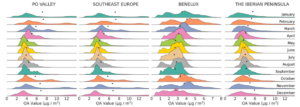
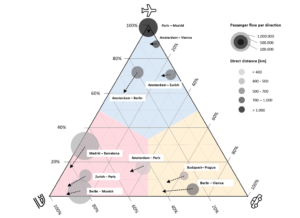
Tradable Mobility Credits for Travel in Europe

A study estimates the effects of Tradable Mobility Credits on Europe’s long-distance leisure travel, where emissions are capped by design and prices emerge from market equilibrium, resulting in a 20% demand reduction, air share dropping from 50% to 42%, and rail increasing from 23% to 32% under a 30% emission target. Emissions Challenge in Long-Distance

Tradable Mobility Credits for Travel in Europe Read More »

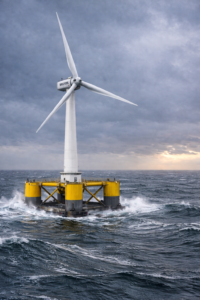
LIDAR-Assisted Pitch Control

This study explores how LIDAR-assisted feedforward pitch control for floating offshore wind turbines uses upstream wind measurements to decrease structural load variations, resulting in reduced failure rates and operational expenditure savings of up to 11% across ScotWind sites, aiding the economic viability of deep-water renewable energy projects. Addressing Challenges in Floating Offshore Wind Floating offshore

LIDAR-Assisted Pitch Control Read More »

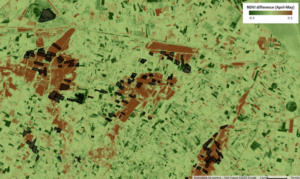
Assessing Crop Flood Damage Using Sentinel-2

Data-Driven Approach to Quantify Agricultural Losses from Flooding Discover a method that combines Sentinel-2 satellite data, topographic information, and field surveys in a random forest model to classify flood damage in 412 agricultural fields, providing quantitative yield loss estimates for the 2023 Emilia-Romagna event and supporting effective compensation strategies in vulnerable areas. Flood Impacts on

Assessing Crop Flood Damage Using Sentinel-2 Read More »

Versioning for Multi-LoD 3D City Model Management

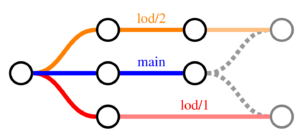
Researchers propose a framework for managing multiple Levels of Detail in 3D city models using CityJSON versioning, with each LoD in a separate branch for independent updates to geometries and semantics, tested on Dutch building data to assess feasibility and maintenance implications. Challenges in Managing Multi-LoD 3D City Models 3D city models are essential in

Versioning for Multi-LoD 3D City Model Management Read More »

Machine Learning for Bicycle Delay Estimation

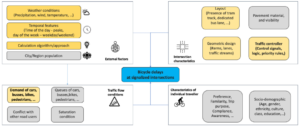
Dutch Study Integrates Sparse GPS and Traffic Signal Data to Double Model Fit in Estimating Average Bicycle Delays, Providing Insights for Traffic Management, Cycling Policy, and Infrastructure Development in Urban Environments Addressing Bicycle Delays in Urban Transportation Networks Bicycle use has increased in urban areas as a sustainable alternative to cars for short to medium

Machine Learning for Bicycle Delay Estimation Read More »

BiOceanic Corridor Megaproject as the new Panama Canal?

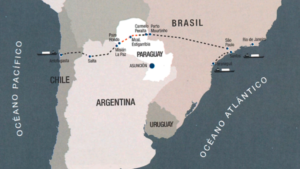
Insights into Multi-National Infrastructure Management This study examines a configuration of seven interorganizational governance mechanisms across three levels in the BiOceanic Corridor program, addressing institutional complexities from diverse national environments in Brazil, Paraguay, Argentina, and Chile, extending prior research focused on single-institutional contexts. Challenges in Transnational Infrastructure Governance and Their Significance Transnational infrastructure megaprojects, such

BiOceanic Corridor Megaproject as the new Panama Canal? Read More »

Remote Sensing for Oxbow Lake Monitoring in Turbid Floodplains

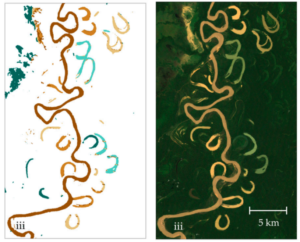
This study employs Google Earth Engine and Landsat 7 imagery alongside random forest classification to analyze multitemporal trends in oxbow lake area, water types, and hydrologic connectivity, providing insights into ecohydrological processes and fish habitat availability in data-scarce tropical river systems such as Bolivia’s Beni River. Challenges in Floodplain Dynamics Monitoring Meandering river floodplains, such

Remote Sensing for Oxbow Lake Monitoring in Turbid Floodplains Read More »

Digital Platforms: Catalysts for Sustainability Transitions in Construction

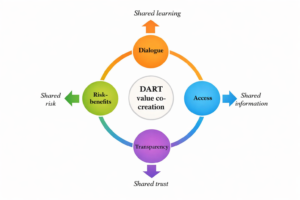
New research from TU Delft demonstrates how a Dutch digital platform for modular timber construction applies the DART co-creation framework to overcome the sector’s unique challenges of fragmentation, inefficiency and resistance to change, fostering stakeholder collaboration, transparency and scalable low-carbon practices. The construction industry accounts for approximately 40% of global energy use, around 30% of

Digital Platforms: Catalysts for Sustainability Transitions in Construction Read More »