
AI Diplomacy
In a world increasingly shaped by Artificial Intelligence, this research delves into the strategic and legal dimensions of AI diplomacy, exploring how nations navigate the AI race.

In a world increasingly shaped by Artificial Intelligence, this research delves into the strategic and legal dimensions of AI diplomacy, exploring how nations navigate the AI race.

This research examines the European Union AI Act, revealing its environmental shortcomings and proposing pathways for integrating sustainability into AI regulation.
Sustainability and the EU AI Act Read More »

Integrating Trustworthiness, Lifecycle Stages, and Stakeholder Roles: A Framework for Addressing AI’s Data-Driven Challenges and Ensuring Ethical Deployment with Actionable Insights for Risk Mitigation and Regulatory Compliance Across Sectors Challenges in AI Governance and Their Significance Artificial intelligence systems have advanced beyond prototypes to support essential functions in sectors such as finance, healthcare, and logistics.
Governance For Ethical AI Read More »
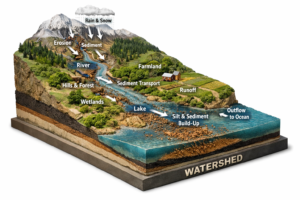
High-frequency turbidity sensors from 134 USGS stations, paired with RUSLE erosion estimates and explainable random forest models, map sediment yield and delivery ratios across the contiguous United States, revealing that human-modified landscapes dominate sediment transport efficiency while natural factors control total production, and highlighting priority sub-basins for targeted management in the Upper Mississippi and Chesapeake
Why Are Some Watersheds More Sediment-Productive Than Others? An Explainable AI Approach Read More »

Analyzing thousands of icebergs captured in time-lapse footage from Alaska and Greenland, this research demonstrates that logistic regression applied to visible width and height can help estimate the probability of instability providing engineers with a foundational, field-derived method for assessing capsize risk in Arctic coastal environments. The Challenge of Iceberg Capsize in Arctic Waters Iceberg
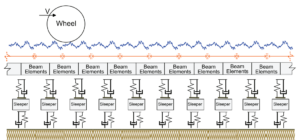
TU Delft researchers present an LSTM-BiLSTM architecture that combines sleeper-level framing of axle-box acceleration signals with LSTM-based temporal feature extraction and bidirectional processing to deliver accurate, simultaneous estimation of railpad and ballast stiffness at individual sleeper resolution — even under realistic measurement noise. The Critical Need for Accurate Track Stiffness Monitoring Railway track stiffness is
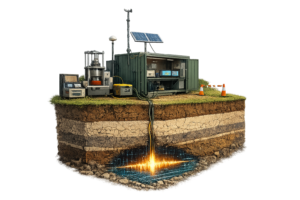
A data-driven review shows how modern machine-learning models consistently outperform traditional empirical equations in predicting soil shear modulus and damping ratio, offering geotechnical engineers a clearer, more efficient path to characterizing dynamic soil behavior while highlighting practical limitations, data requirements, and future research needs. Why Soil Dynamics Still Challenge Engineers Accurate characterization of soil dynamic
Machine Learning Meets Soil Dynamics Read More »
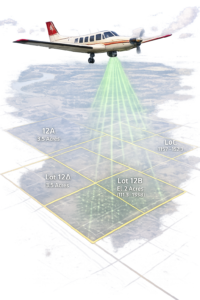
Discover how researchers are transforming urban land administration by integrating cadastral floor plans with nationwide airborne LiDAR to create detailed 3D point clouds, offering a cost-effective alternative to BIM for visualizing legal property boundaries in complex vertical structures—paving the way for scalable digital twins. The Challenge of Vertical Urbanization in Land Administration Urban areas are
Advancing 3D Land Administration with Point Clouds Read More »

A gradient guided adaptive sampling method that repositions collocation points to reduce computational cost, improve stability, and help physics informed neural networks handle complex, high dimensional PDE simulations more efficiently, making advanced scientific machine learning more practical for real engineering analysis and design workflows today. Why Engineers Should Care Partial differential equations (PDEs) underpin much
PACMANN: Smarter Point Placement for AI-Based PDE Solvers Read More »
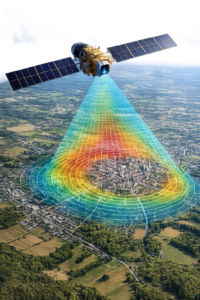
Dive into Shanghai’s sinking secrets: This study fuses 30 years of multi-sensor satellite data with AI modeling to map subsidence shifts from urban cores to coastal zones, revealing how groundwater management curbs rates and offers strategies for flood-resilient cities. The Subsidence Challenge Land subsidence in coastal megacities like Shanghai endangers infrastructure, increases flood risks, and
Shanghai’s 30-Year Land Subsidence Evolution Read More »