Engineering

Digital Platforms: Catalysts for Sustainability Transitions in Construction

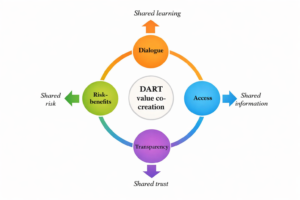
New research from TU Delft demonstrates how a Dutch digital platform for modular timber construction applies the DART co-creation framework to overcome the sector’s unique challenges of fragmentation, inefficiency and resistance to change, fostering stakeholder collaboration, transparency and scalable low-carbon practices. The construction industry accounts for approximately 40% of global energy use, around 30% of […]

Digital Platforms: Catalysts for Sustainability Transitions in Construction Read More »
Regenerative Wind Farming Using Vertical-Axis Turbines

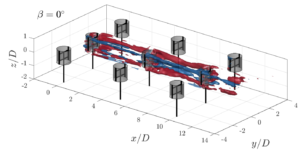
Enhancing Wake Recovery in Dense VAWT Arrays Explore this experimental study on regenerative wind farming, where vertical-axis wind turbines in a high-density grid employ vortex generator modes via blade pitching to entrain momentum, yielding available power increases of up to 6.4 times for downstream rotors and advancing efficiency in wind energy systems. Addressing Wake Losses

Regenerative Wind Farming Using Vertical-Axis Turbines Read More »

Numerical Modeling of Tunnel Behavior Under Fire Exposure

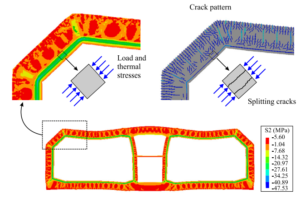
Unveiling Fire Effects on Tunnels: A Detailed Examination of Nonlinear Finite Element Strategies That Simulate Thermo-Mechanical Responses, Validating Models Against Large-Scale Tests to Inform Structural Assessments and Improve Design Practices in Reinforced Concrete Infrastructure – Essential Insights for Engineers. Addressing Tunnel Fire Risks: Significance for Structural Design Tunnel fires, although infrequent, can lead to significant

Numerical Modeling of Tunnel Behavior Under Fire Exposure Read More »

Visual Impact of Blue-Green Infrastructure in Historic Urban Areas

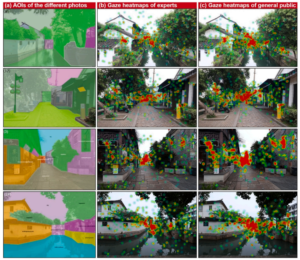
This study develops a framework combining UAV photogrammetry with multi-layered perception methods to examine blue-green infrastructure’s effects on visual attention, preferences, and cognitive interpretations in historic urban areas, offering replicable tools for heritage-sensitive planning and evaluation. Underexplored Visual Role of Blue-Green Infrastructure in Historic Urban Areas Historic urban areas (HUAs) serve as repositories of cultural

Visual Impact of Blue-Green Infrastructure in Historic Urban Areas Read More »

Land Subsidence in Aguascalientes, Mexico: Innovative InSAR and Gravimetric Surveys

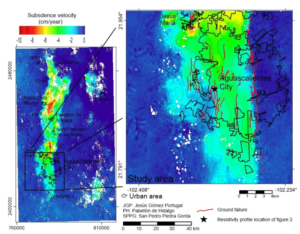
This pioneering research transforms subsidence risk assessment by merging InSAR satellite data with gravimetric mapping, offering a data-driven upgrade to outdated zoning practices and enhancing urban safety in groundwater-dependent regions, around 45 words of cutting-edge engineering insight. Unraveling the Land Subsidence Crisis in Aguascalientes: Why It Demands Urgent Attention In the heart of Mexico’s Aguascalientes

Land Subsidence in Aguascalientes, Mexico: Innovative InSAR and Gravimetric Surveys Read More »

The Build Back Circular Framework

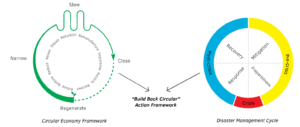
From Devastation to Resilience: Exploring Strategies for Sustainable Post-Disaster Reconstruction This research develops the Build Back Circular framework, integrating circular economy principles—narrowing, slowing, closing, and regenerating resource loops—into post-disaster recovery, with a focus on the 2023 Kahramanmaraş earthquakes in Türkiye, to promote resource efficiency, resilience, and inclusive urban development through ten actionable strategies and stakeholder

The Build Back Circular Framework Read More »

Deep Dive into Energy Geostructures

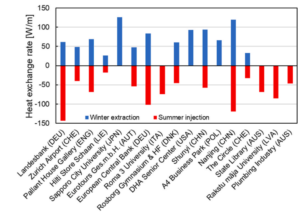
Drawing from a comprehensive database of 972 energy geostructure case studies spanning 27 countries and eight types, this analysis examines geographical trends, thermal performance metrics, design features, and CO₂ reduction potential, underscoring their role in integrating low-enthalpy geothermal energy into sustainable urban heating and cooling systems. Sustainable Urban Energy Challenges and the Relevance of Energy

Deep Dive into Energy Geostructures Read More »

Elasto-Optic Transduction in Polymer-Cladded Silicon Microrings for 2D Force Mapping

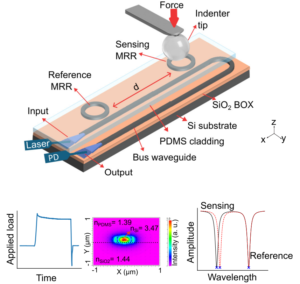
Explore the potential of silicon photonic microring arrays coated with PDMS to detect localized forces through elasto-optic shifts, offering real-time mapping at micrometer resolution on flat surfaces, ideal for unbiased cellular studies and advancing mechanobiology, soft-matter metrology, and tactile interfaces in a scalable, biocompatible format. Addressing Microscale Force Measurement in Soft and Biological Matter Measuring

Elasto-Optic Transduction in Polymer-Cladded Silicon Microrings for 2D Force Mapping Read More »

Annual Memory in the Terrestrial Water Cycle 

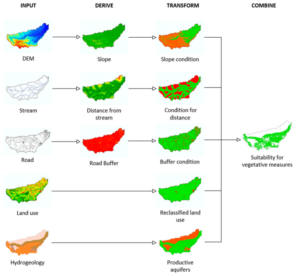
This research refines a GIS-based toolbox by integrating high-resolution land-cover data and new models for afforestation and riparian forest buffers, applied to six European river basins to map suitable locations for large-scale nature-based solutions that reduce hydrometeorological risks and highlight opportunities for combined implementations. Addressing the Escalating Hydrometeorological Risks with Nature-Based Solutions Climate change is

Annual Memory in the Terrestrial Water Cycle  Read More »

Real-Time Data in Urban Sustainability

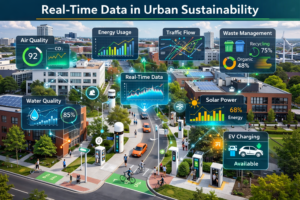
This editorial explores the role of distributed sensors and real-time data in improving urban management, addressing sustainability issues through proactive strategies, digital twins, and inclusive frameworks, drawing on worldwide experiences to inform better decision-making and equitable outcomes. Urban Challenges: The Need for Better Environmental Data Integration Cities are confronting growing pressures from climate change, air

Real-Time Data in Urban Sustainability Read More »