
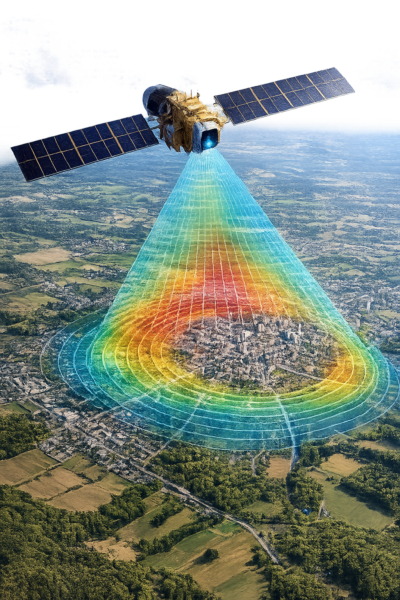
Dive into Shanghai’s sinking secrets: This study fuses 30 years of multi-sensor satellite data with AI modeling to map subsidence shifts from urban cores to coastal zones, revealing how groundwater management curbs rates and offers strategies for flood-resilient cities.
The Subsidence Challenge
Land subsidence in coastal megacities like Shanghai endangers infrastructure, increases flood risks, and leads to substantial economic losses—averaging USD 1.5 billion annually in China, with Shanghai incurring over USD 3.37 billion from 2001 to 2020. This issue impacts urban planners, engineers, and local communities, necessitating effective monitoring and management amid urbanization and environmental pressures.
Prior Approaches to Subsidence Monitoring
Previous studies on Shanghai’s land subsidence have mainly used data from single satellite platforms, limiting analyses to short-term variations and localized effects. Techniques such as Persistent Scatterer Interferometry (PS-InSAR) and Small Baseline Subset (SBAS) have provided millimeter-accurate monitoring, but often did not integrate multi-source satellite data extending back to 1991. Driver assessments typically involved point-specific correlations, linking subsidence to factors like groundwater levels or aquifer properties, while some machine learning applications quantified natural and human influences without examining temporal changes or improving model transparency. Global studies, such as those on 99 coastal cities from 2015 to 2020, underscored groundwater extraction’s role but lacked continuous, long-term records and detailed explanations of evolving mechanisms.
Core Research Focus and Objectives
This study addresses the lack of continuous multi-decadal subsidence measurements from diverse SAR sensors and the limited understanding of how driving factors evolve over time. It aims to develop a 30-year subsidence timeline for Shanghai (1992–2023) and evaluate the varying impacts of key contributors. Differing from earlier single-sensor or short-span research, it combines ERS-1/2, Envisat ASAR, and Sentinel-1 datasets through a logistic model for continuity, then uses Random Forest combined with SHAP to provide interpretable insights into hydrological, geological, and anthropogenic drivers.
Key Contributions of the Study
This work presents a 30-year continuous subsidence dataset for Shanghai, fusing multi-sensor SAR imagery—ERS-1/2 (1992–2004), Envisat ASAR (2003–2010), and Sentinel-1A/B (2016–2023)—via nearest-point matching and logistic regression to address gaps, including Kriging interpolation for 2010–2016 with errors of RMSE 3.2 mm and MAE 1.5 mm. Validated against GNSS and leveling benchmarks, it achieves precision with RMSEs of 3.64 mm/yr for ERS, 3.11 mm/yr for Envisat, and up to 18.77 mm for Sentinel. The Random Forest-SHAP integration improves transparency, identifying time-dependent shifts in driver significance beyond conventional correlations or non-interpretable machine learning. By assessing factors such as evapotranspiration, sediment thickness, groundwater extraction and recharge, precipitation, building volume, and population density—following multicollinearity verification (VIF <3)—it offers a methodology for subsidence analysis in other coastal regions.
Findings and Principal Observations
Subsidence has shifted from Shanghai’s central urban areas to eastern coastal and southern industrial zones, forming three main funnels with maximum cumulative displacements of 388 mm (central), 605 mm (Pudong), and 363 mm (southern). Rates initially accelerated but stabilized after 2008 due to management efforts. SHAP analysis indicated 2000’s key drivers as evapotranspiration (26%), sediment thickness (25%), precipitation (15%), and groundwater extraction (9%), with hydrological factors at 57%. By 2020, recharge contributed 27%, sediment thickness 18%, extraction declined to 1%, and hydrological factors reached 64%.
Broader Implications and Prospects
These results inform targeted groundwater recharge and urban zoning to address subsidence in coastal areas, supporting engineers and policymakers. Potential applications include predictive zoning and monitoring systems. Future work could incorporate higher-resolution groundwater data and climate models to examine interactions with sea-level rise.
Final Perspective: The Value of This Research
As subsidence patterns and drivers change, measures such as expanded recharge can help protect Shanghai from infrastructure damage and flooding. We recognize the authors’ work, which “demonstrate the shifting importance of different subsidence factors over time and provide valuable insights for long-term prevention and control measures.” Share insights or collaboration opportunities—we encourage discussion. For further reading: Lu, C., et al. (2025). Tracking 30-year evolution of subsidence in Shanghai utilizing multi-sensor InSAR and random forest modelling. International Journal of Applied Earth Observation and Geoinformation, 140, 104606. https://doi.org/10.1016/j.jag.2025.104606.