
Researchers at Delft University of Technology explore alternative carbon sources for ethylene production, aiming to reduce the petrochemical industry’s carbon footprint. This study evaluates three innovative processes, highlighting the potential of biobased routes and identifying challenges in electrochemical methods for a sustainable future.
Ethylene’s Environmental Challenge
Ethylene, a key chemical industry component, is mainly produced through steam cracking of fossil-based naphtha, a process that is energy-intensive and significantly contributes to CO2 emissions. With global ethylene demand rising and production expected to increase by 55 million metric tonnes by 2027, the environmental impact is a growing concern. The petrochemical industry, responsible for about 6% of global CO2 emissions, is under pressure to adopt sustainable practices. Transitioning to fossil-free technologies is crucial for meeting climate goals and reducing fossil dependency.
Alternative carbon sources (ACS), such as biomass and CO2, offer promising pathways for sustainable ethylene production. These innovative routes could reduce environmental impacts and support a circular economy model. However, the diversity in feedstocks and conversion technologies poses challenges in evaluating their benefits and trade-offs. This research provides a comprehensive ex-ante techno-economic and environmental assessment of three low technology readiness level (TRL) ethylene production processes, offering insights into their potential to transform the chemical sector.
Evaluating New Methods
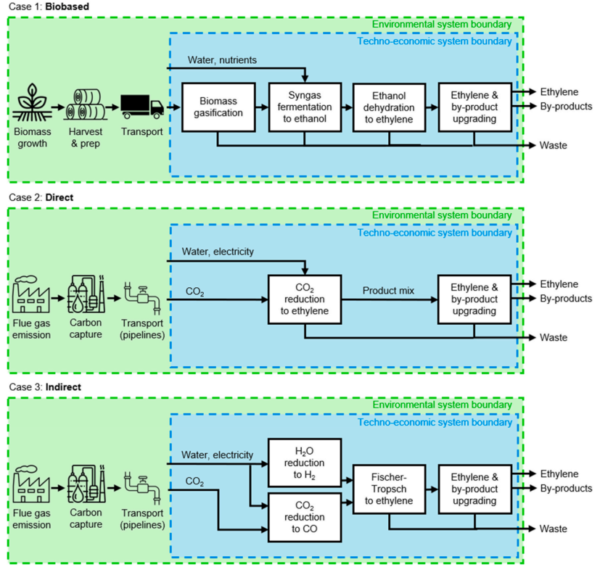
The researchers used a systematic methodology integrating conceptual process design with techno-economic and environmental assessments. The study focused on three distinct ethylene production routes: 1) biobased syngas fermentation to ethanol followed by ethanol dehydration, 2) direct electrochemical conversion of CO2 to ethylene, and 3) indirect CO2 and H2O electrolysis to form syngas, followed by a Fischer-Tropsch step. Each route was evaluated for its technical performance, costs, and carbon footprint.
The biobased route utilizes biomass fermentation, a technology with existing bio-refineries. This route benefits from mild operational conditions and resilience to contaminants. Conversely, the electrochemical routes, though still pre-commercial, offer advantages in scalability and energy storage potential. However, they face significant technological barriers, such as low current density and electrode deactivation, impacting their industrial feasibility.
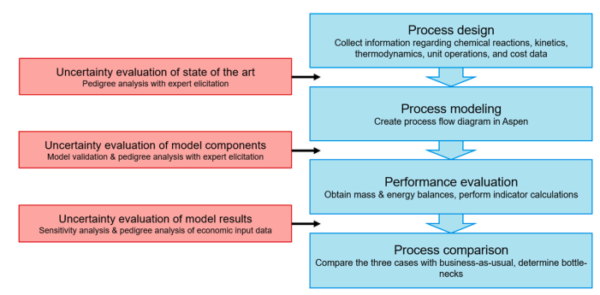
The study’s methodology included a thorough analysis of the complete process designs, encompassing feedstock conditioning, conversion steps, and product recovery. This comprehensive approach aimed to provide a harmonized comparison of the ACS routes, addressing gaps in existing literature that often focus on isolated process components or pair-wise comparisons with traditional methods.
Revealing Key Insights
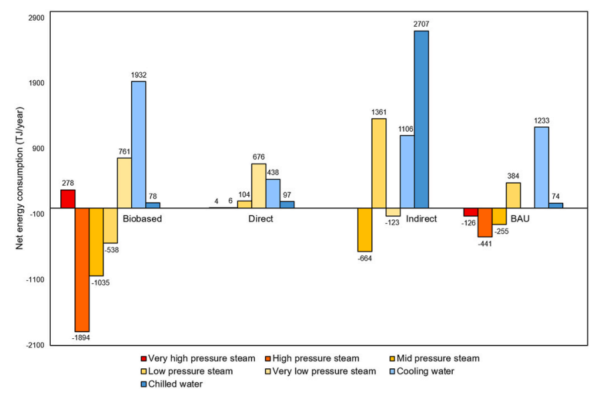
The research found that the biobased syngas fermentation route significantly outperforms the electrochemical routes in terms of techno-economic and environmental performance. This route demonstrated a lower carbon footprint and better economic viability, making it a promising candidate for sustainable ethylene production. In contrast, the direct and indirect electrochemical routes were hindered by the high costs and inefficiencies of the electrolyzer units, underscoring the need for technological advancements in this area.
The indirect route, involving two electrolyzers and a Fischer-Tropsch step, was deemed techno-economically unfeasible for ethylene production. This finding highlights the necessity for further research into Fischer-Tropsch plant designs to enhance the viability of replacing traditional fossil-based refineries.
Charting a Sustainable Course
The study underscores the potential of biobased processes as a viable alternative to fossil-based ethylene production. However, continued research and development are essential to overcome the technological barriers faced by electrochemical routes. Advancements in electrolyzer efficiency and cost reduction are critical to unlocking the full potential of these innovative technologies.
We extend our gratitude to the researchers for their valuable contributions to this field. For those interested in further details or wishing to provide input, please refer to the full study. Together, we can drive the transition to a more sustainable chemical industry.
Reference: Vos, J., Ibarra-Gonzalez, P., Burdyny, T., & Ramírez, A. (2026). Towards fossil-free ethylene: ex-ante techno-economic comparison of three alternative processes at low technology readiness levels. Journal of Cleaner Production, 545, Article 147746. DOI: https://doi.org/10.1016/j.jclepro.2026.147746