
A new digital twin framework is poised to transform the monitoring and maintenance of aging bridge infrastructure. By merging real-time data with advanced simulations, this approach enhances resilience, supports predictive maintenance, and offers a strategic pathway toward sustainable infrastructure management.
The Challenge of Aging Bridges
Bridge infrastructures are crucial to modern society, ensuring connectivity and supporting economic activities. However, as these structures age, they face increasing risks from environmental stress, degradation, and heavy loads, which can compromise safety and lead to costly repairs or failures. Traditional Structural Health Monitoring (SHM) methods, such as periodic visual inspections and manual data collection, have provided essential insights but are limited by their subjectivity, lack of real-time capabilities, and incomplete characterization of dynamic structural behavior. These limitations highlight the need for advanced methods that enable continuous monitoring, predictive maintenance, and efficient resource allocation.
Digital Twin (DT) technology has emerged as a transformative approach in infrastructure management, offering synchronized virtual counterparts of physical assets. By integrating real-time sensor data, numerical simulations, and advanced analytics, DTs facilitate predictive maintenance, early anomaly detection, and intuitive visualization of structural performance. Despite significant advancements in sectors like manufacturing and aerospace, the application of DTs in civil infrastructure, particularly for bridges, remains limited. Existing frameworks often focus on isolated functions, such as geometric reconstruction using drones or anomaly detection via machine learning, without achieving full integration of sensing, simulation, and analytics in a closed-loop feedback system.
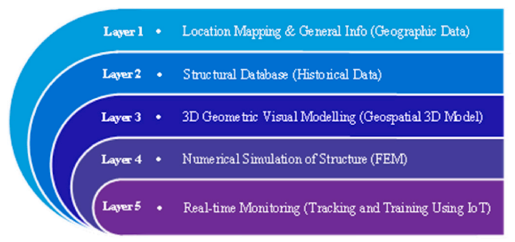
This research addresses the gap by presenting a multi-layered DT framework specifically designed for structural health monitoring of bridge infrastructures. The framework aims to enhance the resilience of aging bridges through real-time monitoring and data-driven decision support, offering a unified, data-centric strategy for infrastructure management.
Innovative Research Approach
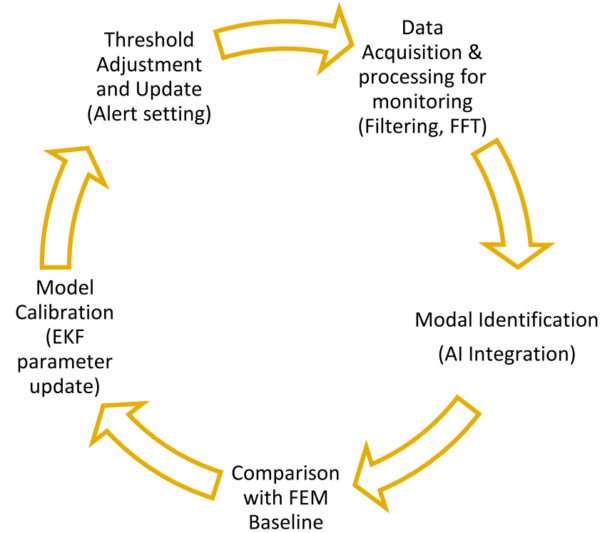
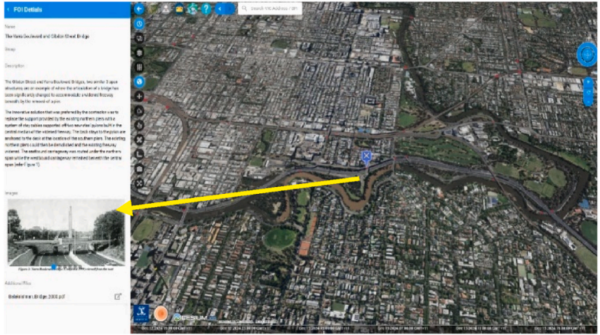
The research introduces a comprehensive Digital Twin (DT) framework that integrates physics-based Finite Element Modelling (FEM), drone-based photogrammetry, and wireless sensor networks to create a dynamic digital representation of bridge infrastructures. This system continuously synchronizes sensor data with virtual models, establishing a foundation for predictive maintenance and lifecycle optimization.
Key innovations of the framework include a modular architecture that supports seamless integration of diverse data sources, a closed-loop feedback mechanism for iterative model updating, and functionality for real-time anomaly detection. The system enables proactive monitoring by facilitating dynamic condition tracking, structural behavior analysis, and long-term trend forecasting.
The research investigates three core aspects: the design and integration of the framework, combining physics-based modeling and IoT-enabled sensing into a unified DT–SHM platform; the reliability of the framework for event and condition detection; and the scalability of the approach across diverse bridge typologies, including concrete, steel, and timber bridges, as well as complex configurations such as suspension bridges.
The framework’s novelty lies in its full-scale implementation and field validation on operational road and rail bridges. Unlike existing DT-SHM approaches that often remain confined to a single domain, the proposed practical framework demonstrates a fully integrated system on a real bridge. It is capable of continuously integrating multi-source data streams, synchronizing them with physics-based models, and analyzing structural behavior in near real-time.
Demonstrated Success and Conclusions
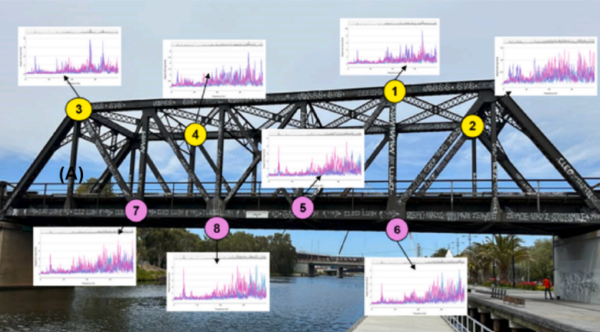
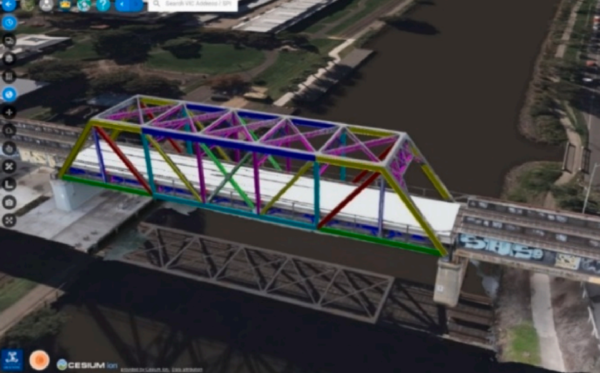
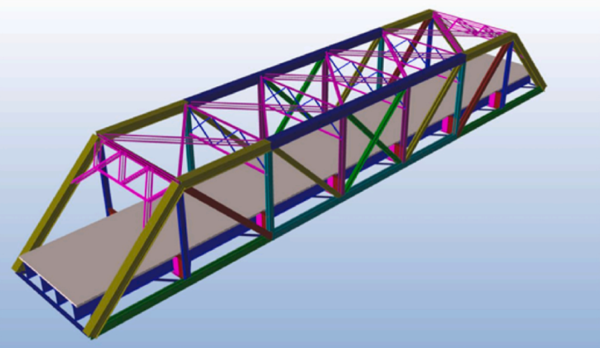
The framework was demonstrated on an operational railway truss bridge, where live vibration and environmental data were used to calibrate and validate the DT in a real-world setting. The results underscore the system’s potential as a robust and scalable monitoring solution for historically significant and aging transport assets. The research highlights the framework’s adaptability for aging and deteriorated assets, validating its effectiveness in real-time monitoring and proactive maintenance.
The study concludes that the proposed DT framework offers a practical, scalable, and validated approach to DT–SHM integration, moving beyond theoretical models to provide a data-centric solution for managing aging infrastructure. The main contributions include a hybrid modeling platform that integrates FEM and data-driven models, a scalable data pipeline for continuous DT synchronization, and an empirical demonstration of the framework’s adaptability.
Future Directions and Impact
This research presents a strategic pathway toward more intelligent and sustainable infrastructure systems, prioritizing resilience, informed maintenance planning, and future adaptability. The DT framework not only enhances operational awareness but also serves as an innovative asset management tool, enabling proactive decision-making by combining monitoring, analysis, and predictive insights within a unified digital twin environment.
We thank the authors for their significant contribution to advancing infrastructure management. For those interested in further collaboration or sharing insights, please reach out to the research team.
Reference: Maryam Nasim, Abbas Rajabifard, Yiqun Chen, Bijan Samali. “A demonstration of a digital twin framework for structural health monitoring: Application to bridge infrastructures.” Journal of Infrastructure Intelligence and Resilience 5 (2026) 100184. DOI: https://doi.org/10.1016/j.iintel.2025.100184