
This research examines public concern about microplastics in Germany and Italy, focusing on awareness, knowledge, and behavioral intentions. It emphasizes the need to consider everyday relevance and indirect indicators to gain a deeper understanding of public perceptions and actions concerning microplastic pollution.
Understanding the Microplastics Dilemma
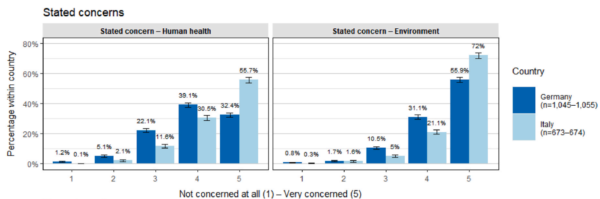
The proliferation of microplastics in the environment poses significant risks to both ecological systems and human health. These tiny plastic particles, often less than 5mm in size, can enter the food chain through seafood consumption, inhalation, or skin contact. Despite the growing body of scientific research, many questions remain unresolved regarding the full extent of these risks. Public concern about microplastics has been documented, yet it is commonly assessed through surveys that measure stated concern. This approach may not fully capture the complexity of public perception, as responses can be influenced by immediate contextual factors, leading to potential misinterpretations.
The study conducted by Robin Janzik and colleagues addresses this issue by broadening the perspective on public concern about microplastics. It distinguishes between stated concern, everyday relevance, and behavioral intentions. The research aims to provide a more comprehensive understanding by not only examining how concerned people say they are but also how microplastics are integrated into their daily thoughts and actions. This is crucial because microplastics, due to their microscopic size and the ongoing scientific uncertainties surrounding their effects, might not consistently occupy a prominent place in public consciousness.
Furthermore, awareness and knowledge about microplastics vary across different demographics and countries. Previous studies have shown that awareness is a prerequisite for concern, yet it is often lower in certain populations. For instance, Italian health professional trainees have reported low awareness and knowledge about microplastics. Understanding these differences is vital for developing effective communication strategies and interventions aimed at mitigating the risks associated with microplastics.
Innovative Survey Approach
The research team conducted a cross-sectional random-quota survey involving 1,135 German and 1,124 Italian citizens. The survey was designed to assess not only the stated concern about microplastics but also more indirect indicators such as everyday relevance and behavioral intentions. This approach allowed the researchers to explore how often individuals think about or discuss microplastics in their daily lives and their intentions to reduce exposure.
To provide a comprehensive analysis, the study examined the levels of awareness and objective knowledge about microplastics across different demographics and countries. The researchers aimed to understand how these factors are associated with various indicators of concern. By replicating earlier work, they confirmed that awareness was generally lower in Italy compared to Germany, while stated concern remained high across both countries.
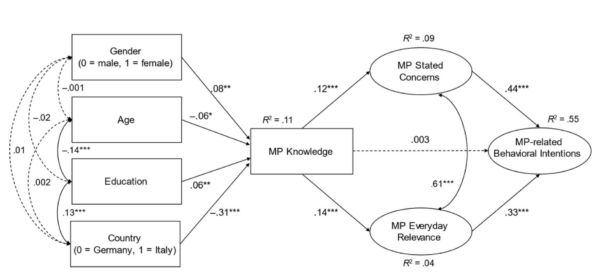
The study also employed a path model to investigate the relationship between objective knowledge and behavioral intentions. This model considered the mediating role of different types of concern, with a particular focus on the additional contribution of everyday relevance beyond the commonly measured stated concern. This approach allowed the researchers to explore the causal chain of knowledge, awareness, concern, and action more directly.
Key Findings and Insights
The findings reveal a nuanced picture of public concern about microplastics. Although stated concern was high, most participants reported only occasionally thinking or talking about microplastics. Despite this, there was a strong tendency for individuals to express intentions to engage in behaviors aimed at reducing exposure. The study found that both stated concern and everyday relevance mediated the relationship between microplastics knowledge and behavioral intentions.
These results underscore the importance of considering multiple metrics when assessing public concern about microplastics. The positive associations between public knowledge and all three metrics—stated concern, everyday relevance, and behavioral intentions—highlight the potential benefits of increasing public knowledge about microplastics. The study suggests that even if microplastics are not particularly salient in everyday thoughts or discussions, they still concern many citizens in Germany and Italy.
Future Directions and Implications
This research provides valuable insights into the complex dynamics of public concern about microplastics. By highlighting the role of everyday relevance and behavioral intentions, it offers a more comprehensive framework for understanding public perceptions and actions. The findings suggest that increasing public knowledge could enhance concern and drive behavioral change, potentially leading to more effective risk mitigation strategies.
Future studies should investigate the causal relationships between knowledge, awareness, concern, and action more directly. This could involve exploring how different communication strategies influence public perceptions and behaviors. The authors invite further research and discussion on this topic and encourage stakeholders to consider these insights when developing policies and interventions related to microplastics.
Reference: Robin Janzik et al. “Is the public really concerned about microplastics? The importance of measuring everyday relevance and behavioral intentions as well as stated concern.” Journal of Environmental Psychology 110 (2026) 102963. DOI: https://doi.org/10.1016/j.jenvp.2026.102963