
This research explores the pivotal role of infrastructural visibility in advancing social innovation within Germany’s energy transition. By examining two municipalities, it underscores how the visibility or invisibility of energy infrastructures can profoundly influence local cooperation and sociomaterial relations, impacting the success of energy initiatives.
Understanding the Energiewende Challenge
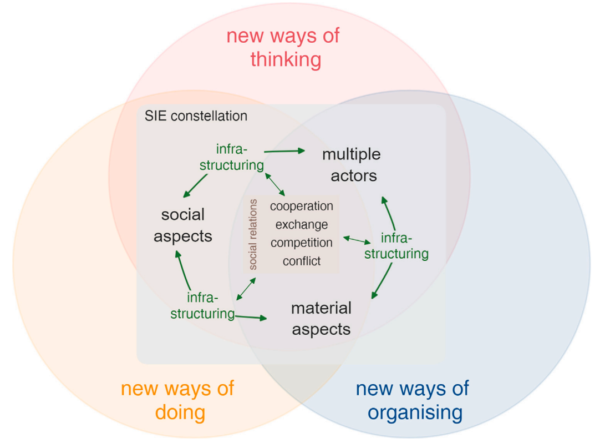
Germany’s Energiewende signifies a significant shift towards sustainable energy systems, requiring active citizen and local actor participation. This transition is a social challenge, necessitating new cooperation forms between municipalities and citizens. The research by Catharina Lüder and colleagues investigates how these sociomaterial relations can be stabilized through infrastructuring—the ongoing formation of relationships between social and material components.
In rural areas with limited resources, municipalities play a crucial role in managing technical infrastructures and fostering citizen cooperation. This is particularly challenging in small communities where participation is vital yet often contested. The study examines the interplay between social innovation processes and infrastructures in rural municipalities to uncover how these dynamics can facilitate or hinder local energy transitions.
Innovative Approaches to Infrastructuring
The study employs qualitative research, utilizing interviews in two Saxony-Anhalt municipalities. These municipalities represent different approaches to infrastructuring in renewable energy contexts. The first case involves a former mining village where renewable energy infrastructures were made invisible to citizens. The second focuses on ‘wind villages’ where a wind farm’s visibility was used to experiment with new participation forms.
The researchers adopt a relational understanding of infrastructure, viewing it as an active site where new relations between people and technologies are forged. This perspective allows for a deeper analysis of how sociomaterial relations are shaped through infrastructuring processes. The study builds on the concept of social innovations in energy (SIE), encompassing new ways of doing, thinking, and organizing energy beyond mere technological acceptance.
Key Findings and Insights
The findings indicate that visible energy infrastructures are crucial for stabilizing sociomaterial relations, facilitating cooperation between municipalities and citizens. In the ‘wind villages’, the wind farm’s visibility engaged local actors and fostered new participation forms, leading to active cooperation and a sense of ownership among citizens, essential for successful local energy transitions.
Conversely, in the former mining village, the invisibility of renewable energy infrastructures limited citizen engagement and hindered cooperation. The study concludes that visible infrastructures create distinct cooperation opportunities by making sociomaterial infrastructures more tangible to local actors, encouraging active participation and fostering new social innovation forms in energy.
Future Directions and Practical Implications
The research emphasizes the importance of infrastructural visibility in shaping successful rural energy transitions. By making energy infrastructures visible, municipalities can foster cooperation and participation, crucial for achieving sustainable energy systems. This has significant implications for policymakers and practitioners involved in energy transitions, highlighting the need to consider infrastructuring’s social dimensions.
Future research could explore applying these findings in different contexts, particularly in regions with varying socio-economic conditions. The study opens new avenues for understanding infrastructuring’s role in social innovation processes, offering valuable insights for enhancing citizen engagement in energy transitions.
Reference: Catharina Lüder, Lennart Zinck, Ariane Debourdeau, Friederike Rohde. “The role of infrastructural visibility for social innovation processes: Stabilising new sociomaterial relations through infrastructuring.” Energy Research & Social Science 132 (2026) 104560. DOI: https://doi.org/10.1016/j.erss.2026.104560