
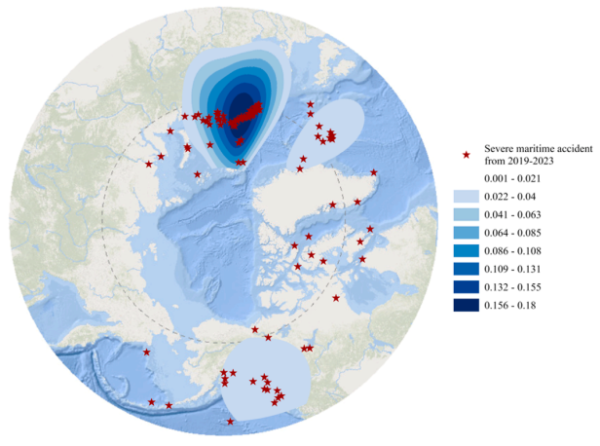
As Arctic maritime activity rises, effective risk management becomes crucial. This study presents a data-driven framework to analyze trends and factors influencing maritime accidents, focusing on their severity and pollution. It offers vital insights for improving Arctic shipping risk management strategies.
Arctic Waters: A High-Risk Zone
With the melting Arctic ice, maritime activities have increased, posing unique challenges for shipping risk management. The region’s harsh environmental conditions, lack of infrastructure, and ecological vulnerability make it a high-risk area for maritime operations. Accidents can lead to severe consequences, including serious casualties and environmental pollution, exacerbated by limited search and rescue resources.
Previous research primarily estimated accident probabilities based on sea ice, weather, and ship operations. However, a comprehensive analysis of accident evolution and factors influencing severity and pollution was lacking. Understanding these factors is crucial for developing targeted risk control options and enhancing Arctic shipping risk management.
This research addresses these gaps by proposing a comprehensive analytical framework that integrates maritime accident data with hydrometeorological data. The framework analyzes the evolution trends of maritime accidents in Arctic waters and identifies key factors impacting both the severity and pollution of these accidents, providing critical insights for effective risk mitigation.
Innovative Research Methodology
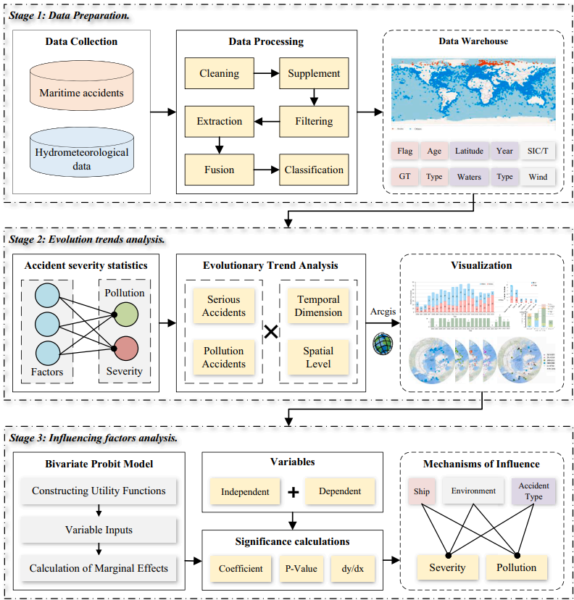
The research introduces a data-driven framework encompassing three stages: data preparation, evolution trends analysis, and influencing factors analysis. Data preparation involves collecting and processing maritime accident data from sources like Lloyd’s List Intelligence, IMO GISIS, and the ECMWF ERA5 dataset. This dataset includes ship information, accident details, and environmental conditions.
In the evolution trends analysis stage, the study examines the temporal and spatial characteristics of maritime accidents in Arctic waters, analyzing their severity and pollution over time. A bivariate probit model explores the intrinsic mechanisms behind accident impacts, considering the relationship between severity and pollution.
The influencing factors analysis involves conducting a marginal effect analysis to quantify the impact of various factors on accident severity and pollution. The analysis reveals that flag state characteristics significantly influence both severity and pollution. Factors such as machinery damage, wrecked, allision, hull damage, fire/explosion, strong winds, and sea ice contribute positively to severity, while negatively influencing pollution accidents.
Key Findings and Conclusions
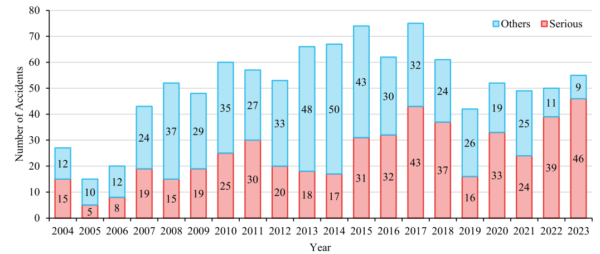
The research findings indicate that the proposed framework effectively identifies key factors influencing the severity and pollution of maritime accidents in Arctic waters. Flag state characteristics play a significant role in both severity and pollution. Additionally, factors like machinery damage, wrecked, allision, hull damage, fire/explosion, strong winds, and sea ice contribute positively to accident severity while negatively impacting pollution accidents.
The study’s use of a bivariate probit model provides a comprehensive understanding of the relationship between accident severity and pollution, offering valuable insights for Arctic shipping risk management. The marginal effect analysis quantifies the specific influences of various factors, highlighting the importance of considering both technical and environmental factors in risk mitigation strategies.
Future Directions and Impact
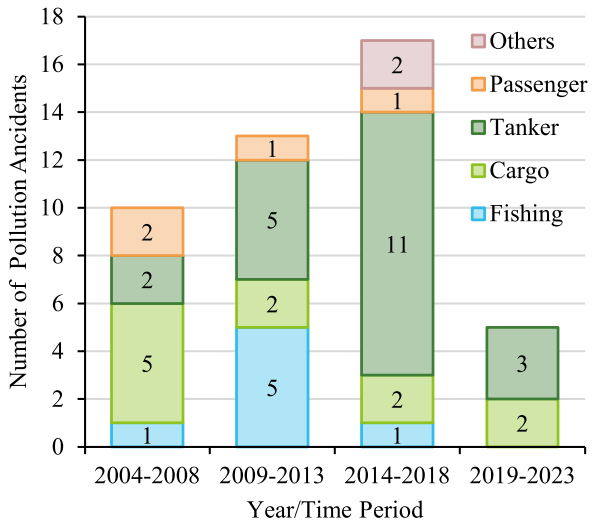
This research offers a novel perspective on Arctic shipping risk management by identifying critical factors influencing maritime accidents. The findings have significant implications for developing targeted risk control options and enhancing the management of Arctic shipping risks. The framework can serve as a valuable tool for policymakers and industry stakeholders in making informed decisions to mitigate risks associated with Arctic maritime activities.
Future research could further explore the dynamic evolution of maritime accidents under changing Arctic climate conditions and investigate additional factors influencing accident severity and pollution. Integrating advanced modeling techniques and real-time data could enhance the framework’s predictive capabilities, providing more robust insights for risk management.
Thank you to the authors for their valuable contribution to this field. If you have any input or wish to get in touch, please do so. For those interested in delving deeper into this research, the full citation is provided below.
Reference: Fu, S., Cui, M., Wu, N., Zhang, M., & Lang, X. (2026). Evolution trends and influencing factors analysis for the severity and pollution of maritime accidents in Arctic waters from multi-source data. Reliability Engineering and System Safety, 266, 111644. DOI: https://doi.org/10.1016/j.ress.2025.111644