
Researchers have developed a high-resolution equity-based metric to prioritize infrastructure interventions, addressing the need for equitable resource distribution. This approach aims to transform infrastructure decision-making, particularly in disaster-prone areas, by ensuring fairer outcomes for vulnerable communities.
The Urgency of Effective Prioritization
Infrastructure prioritization presents a critical challenge, especially under budgetary and temporal constraints. In the United States, infrastructure is often rated as subpar by the American Society of Civil Engineers. The urgency for effective prioritization is amplified by the increasing frequency of costly natural disasters, which demand efficient allocation of limited resources to serve entire communities. Traditional prioritization methods, often based on cost or time, fail to address the broader social impacts and equity considerations necessary for bolstering community resilience.
Over the past decade, there has been a growing call for infrastructure decisions to incorporate equity, recognizing that infrastructure failures disproportionately impact vulnerable populations. These inequities are exacerbated in post-disaster scenarios, where socially vulnerable groups experience more frequent and prolonged outages. Initiatives like the Justice40 aim to reduce these disparities, highlighting the need for prioritization methods that can quantify and address equity at a meaningful resolution.
The challenge lies in developing metrics that can support high-resolution evaluations, which are essential for understanding and addressing the differences across and within community subgroups. Existing equity metrics, such as the Gini and Theil indices, provide only system-wide assessments, potentially overlooking small, high-vulnerability groups. This research addresses this gap by introducing a high-resolution, decomposition-based metric that enables targeted prioritization, ensuring that no population fraction is obscured.
Introducing a New Framework
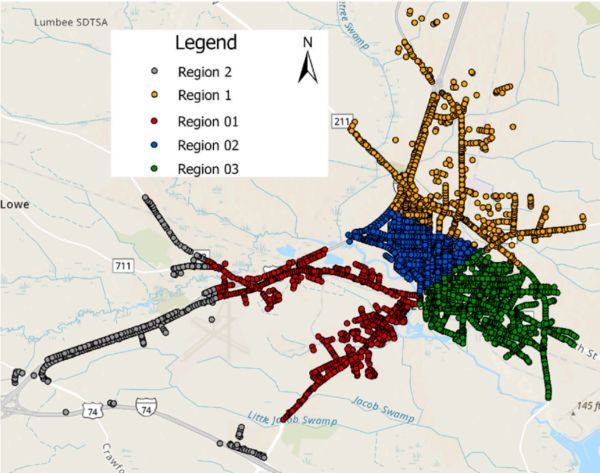
The research introduces an equity-based prioritization framework utilizing a metric derived from the individual Theil’s T, an equity measure that allows for high-resolution evaluation of infrastructure divisions. This metric is particularly suited for the restorative dimension of equity, as it avoids muting outage impact inequities and explicitly identifies disproportionately impacted areas. The framework is demonstrated through a case study on the electric distribution network in Lumberton, NC.
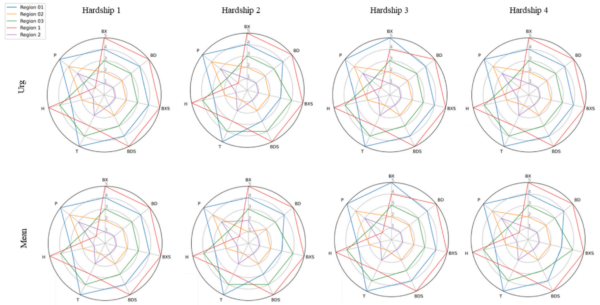
The study explores various definitions of outage impact as the scarce resource, including tolerance, hardship, and burden, to understand their influence on prioritization. The equity-based prioritization using individual Theil’s T is compared against conventional population-centric and mean scarce resource-based prioritizations. This comparison investigates whether the equity metric or the definitions of scarce resources lead to divergent prioritization outcomes.
By implementing this high-resolution metric, the researchers aim to support more equitable infrastructure prioritization, moving beyond traditional methods that often prioritize based on aggregate cost or time metrics. The approach not only advances the restorative equity dimension but also supports recognitional equity by improving the identification of inequities at a granular level.
Key Findings and Insights
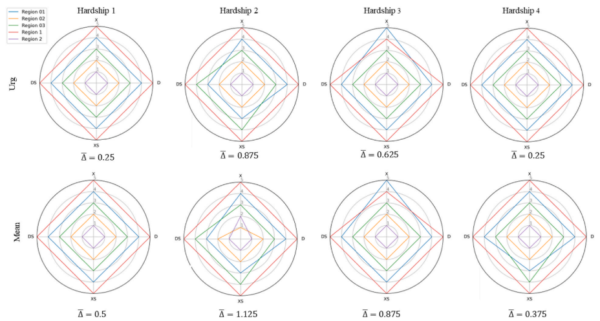
The study reveals a significant divergence between equity-based and conventional prioritization methods, with the equity approach leading to a complete reversal in prioritization outcomes. This highlights the potential of the individual Theil’s T metric to transform infrastructure decision-making by ensuring fairer outcomes for vulnerable communities. Additionally, while variations in prioritization were observed between different scarce resource definitions, they were less pronounced than the differences between the equity-based and conventional approaches.
The findings underscore the importance of further investigations into the proper definition and implementation of scarce resources, alongside other conventional decision criteria. The research demonstrates the metric’s capability to support high-resolution infrastructure prioritization from an equity-based paradigm, paving the way for more inclusive and resilient infrastructure planning.
Future Directions and Opportunities
This research marks a significant step forward in integrating equity considerations into infrastructure prioritization, offering a promising tool for addressing the inequities that plague current decision-making processes. By enabling high-resolution evaluations, the metric ensures that vulnerable populations are not overlooked, fostering more resilient and equitable communities.
Future research should focus on refining the definitions of scarce resources and exploring the metric’s application across different infrastructure scenarios. The potential for this innovative approach to transform infrastructure planning and policy is immense, and continued exploration and implementation are crucial.
Reference: Abigail L. Beck, Eun Jeong Cha, Tim F. Liao. “A metric to support higher-resolution equity-based infrastructure prioritization.” International Journal of Disaster Risk Reduction 137 (2026) 106083. DOI: https://doi.org/10.1016/j.ijdrr.2026.106083