Civil Engineering

Numerical Modeling of Tunnel Behavior Under Fire Exposure

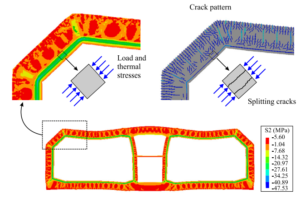
Unveiling Fire Effects on Tunnels: A Detailed Examination of Nonlinear Finite Element Strategies That Simulate Thermo-Mechanical Responses, Validating Models Against Large-Scale Tests to Inform Structural Assessments and Improve Design Practices in Reinforced Concrete Infrastructure – Essential Insights for Engineers. Addressing Tunnel Fire Risks: Significance for Structural Design Tunnel fires, although infrequent, can lead to significant […]

Numerical Modeling of Tunnel Behavior Under Fire Exposure Read More »
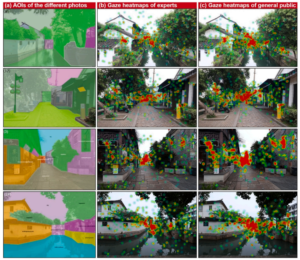
Visual Impact of Blue-Green Infrastructure in Historic Urban Areas

This study develops a framework combining UAV photogrammetry with multi-layered perception methods to examine blue-green infrastructure’s effects on visual attention, preferences, and cognitive interpretations in historic urban areas, offering replicable tools for heritage-sensitive planning and evaluation. Underexplored Visual Role of Blue-Green Infrastructure in Historic Urban Areas Historic urban areas (HUAs) serve as repositories of cultural

Visual Impact of Blue-Green Infrastructure in Historic Urban Areas Read More »

Land Subsidence in Aguascalientes, Mexico: Innovative InSAR and Gravimetric Surveys

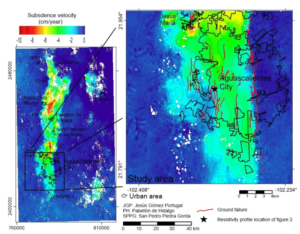
This pioneering research transforms subsidence risk assessment by merging InSAR satellite data with gravimetric mapping, offering a data-driven upgrade to outdated zoning practices and enhancing urban safety in groundwater-dependent regions, around 45 words of cutting-edge engineering insight. Unraveling the Land Subsidence Crisis in Aguascalientes: Why It Demands Urgent Attention In the heart of Mexico’s Aguascalientes

Land Subsidence in Aguascalientes, Mexico: Innovative InSAR and Gravimetric Surveys Read More »

The Build Back Circular Framework

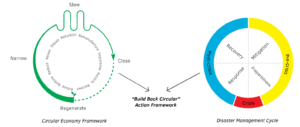
From Devastation to Resilience: Exploring Strategies for Sustainable Post-Disaster Reconstruction This research develops the Build Back Circular framework, integrating circular economy principles—narrowing, slowing, closing, and regenerating resource loops—into post-disaster recovery, with a focus on the 2023 Kahramanmaraş earthquakes in Türkiye, to promote resource efficiency, resilience, and inclusive urban development through ten actionable strategies and stakeholder

The Build Back Circular Framework Read More »

Deep Dive into Energy Geostructures

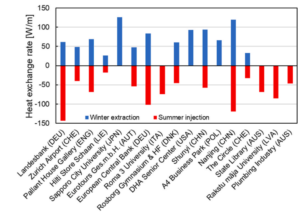
Drawing from a comprehensive database of 972 energy geostructure case studies spanning 27 countries and eight types, this analysis examines geographical trends, thermal performance metrics, design features, and CO₂ reduction potential, underscoring their role in integrating low-enthalpy geothermal energy into sustainable urban heating and cooling systems. Sustainable Urban Energy Challenges and the Relevance of Energy

Deep Dive into Energy Geostructures Read More »

Real-Time Data in Urban Sustainability

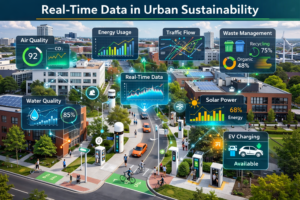
This editorial explores the role of distributed sensors and real-time data in improving urban management, addressing sustainability issues through proactive strategies, digital twins, and inclusive frameworks, drawing on worldwide experiences to inform better decision-making and equitable outcomes. Urban Challenges: The Need for Better Environmental Data Integration Cities are confronting growing pressures from climate change, air

Real-Time Data in Urban Sustainability Read More »

Insar for landslide detection with a bridge

Analyzing Landslide-Bridge Interactions Through InSAR and Numerical Modeling

This study integrates InSAR satellite monitoring with three-dimensional numerical modeling to examine the effects of a landslide on a bridge, addressing the one-dimensional limitations of InSAR through modeling-derived displacement directions and validating simulations with observed surface deformations for improved understanding of infrastructure vulnerabilities in geologically unstable regions. Understanding the Challenge: Landslides and Infrastructure Risks Landslides

Analyzing Landslide-Bridge Interactions Through InSAR and Numerical Modeling Read More »

Quay Amsterdam canal construction INSAR SHM

Structural Health Monitoring throught enhanced MT-InSAR

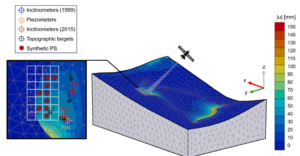
This research introduces a structural-based inverse approach that integrates MT-InSAR characteristics with numerical simulations of damage mechanisms, enabling the identification of the minimum number and optimal placement of persistent scatterers to assess surface displacements’ representativeness for specific infrastructure monitoring needs, surpassing traditional density-based evaluations in precision and reliability. The Challenge in Infrastructure Monitoring A significant

Structural Health Monitoring throught enhanced MT-InSAR Read More »

Why Are Some Watersheds More Sediment-Productive Than Others? An Explainable AI Approach

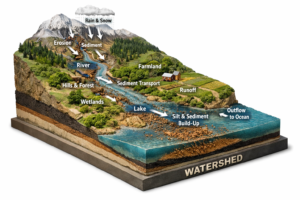
High-frequency turbidity sensors from 134 USGS stations, paired with RUSLE erosion estimates and explainable random forest models, map sediment yield and delivery ratios across the contiguous United States, revealing that human-modified landscapes dominate sediment transport efficiency while natural factors control total production, and highlighting priority sub-basins for targeted management in the Upper Mississippi and Chesapeake

Why Are Some Watersheds More Sediment-Productive Than Others? An Explainable AI Approach Read More »

Bidirectional LSTM Networks Enable High-Resolution Railway Track Stiffness Monitoring from Drive-By Vibrations

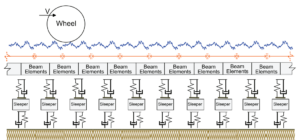
TU Delft researchers present an LSTM-BiLSTM architecture that combines sleeper-level framing of axle-box acceleration signals with LSTM-based temporal feature extraction and bidirectional processing to deliver accurate, simultaneous estimation of railpad and ballast stiffness at individual sleeper resolution — even under realistic measurement noise. The Critical Need for Accurate Track Stiffness Monitoring Railway track stiffness is

Bidirectional LSTM Networks Enable High-Resolution Railway Track Stiffness Monitoring from Drive-By Vibrations Read More »