Geomatics

Annual Memory in the Terrestrial Water Cycle 

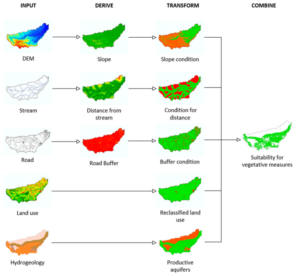
This research refines a GIS-based toolbox by integrating high-resolution land-cover data and new models for afforestation and riparian forest buffers, applied to six European river basins to map suitable locations for large-scale nature-based solutions that reduce hydrometeorological risks and highlight opportunities for combined implementations. Addressing the Escalating Hydrometeorological Risks with Nature-Based Solutions Climate change is […]

Annual Memory in the Terrestrial Water Cycle  Read More »
3d historical city

Reconstructing Historical 3D City Models from Maps

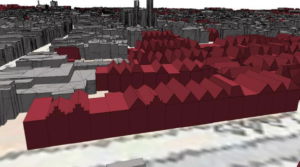
Researchers at TU Delft present a methodology to generate plausible 3D city models from scanned historical maps, using alignment, procedural modeling, and height inference to minimize manual work and support applications like population estimation, disease mapping, and spatial simulations for European cities between 1700 and 2000. Challenges in Historical 3D City Modeling and Their Significance

Reconstructing Historical 3D City Models from Maps Read More »

The Comprehensive Global Building Dataset: GlobalBuildingAtlas

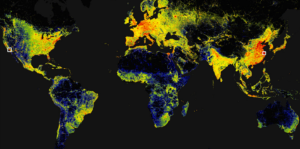
GlobalBuildingAtlas introduces an open dataset with global coverage of 2.75 billion building polygons, 3 m resolution height maps, and LoD1 3D models, derived from satellite imagery, offering enhanced detail for urban analysis, planning, and monitoring progress toward the UN’s Sustainable Development Goals. The Need for Detailed Global Building Information Buildings serve as the foundation of

The Comprehensive Global Building Dataset: GlobalBuildingAtlas Read More »

Low-Cost SFCW Radar Platform Advances Sub-Daily Environmental Monitoring

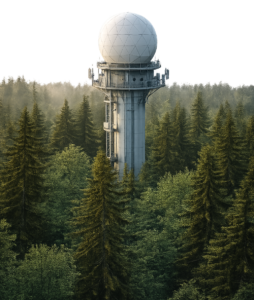
Researchers have developed an affordable tower-mounted SFCW radar built around a compact SDR-based VNA and enhanced RF front end. Operating in L- and C-bands with dual polarization, the system captures high-temporal-resolution microwave data on soil, vegetation, and snow processes—directly addressing the temporal gaps that limit satellite observations of rapid Earth system dynamics. The Challenge of

Low-Cost SFCW Radar Platform Advances Sub-Daily Environmental Monitoring Read More »

Volumetric Disentanglement: A Practical Path to Object-Level Editing in NeRF Scenes

Neural Radiance Fields (NeRFs) have changed how engineers think about 3D capture. With a modest set of photos, you can reconstruct impressively photorealistic 3D scenes. For many teams, that alone feels like magic. But then comes the real-world question: How do you edit those scenes? Remove a chair. Enlarge a TV. Swap out a tree

Volumetric Disentanglement: A Practical Path to Object-Level Editing in NeRF Scenes Read More »

Shanghai’s 30-Year Land Subsidence Evolution

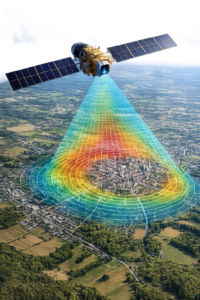
Dive into Shanghai’s sinking secrets: This study fuses 30 years of multi-sensor satellite data with AI modeling to map subsidence shifts from urban cores to coastal zones, revealing how groundwater management curbs rates and offers strategies for flood-resilient cities. The Subsidence Challenge Land subsidence in coastal megacities like Shanghai endangers infrastructure, increases flood risks, and

Shanghai’s 30-Year Land Subsidence Evolution Read More »

Advancing Antarctic Ice Sheet Projections with Bedrock Modeling

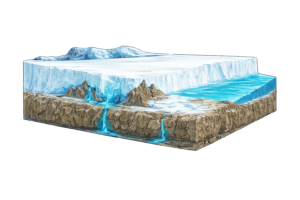
New research reveals how smarter, streamlined bedrock modeling can closely match complex 3D simulations, transforming Antarctic ice-sheet forecasts. By boosting speed without sacrificing accuracy, it sharpens sea-level rise predictions, empowers larger climate ensembles, and equips planners worldwide with clearer insights for coastal futures ahead today. A Serious Issue Antarctic ice melt contributes to sea-level rise,

Advancing Antarctic Ice Sheet Projections with Bedrock Modeling Read More »

Indoor Positioning Using Augmented Reality

Imagine stepping into a smoke-filled building during an emergency, where every second counts and traditional navigation fails—yet augmented reality glasses reveal your precise location on a digital floor plan, guiding rescuers to safety. In his 2020 MSc thesis, Laurens Oostwegel pioneered a solution using the Microsoft HoloLens to combat SLAM’s drift errors through continuous spatial

Indoor Positioning Using Augmented Reality Read More »

AI for Wild Weather Swings; Challenges and Solutions

This research pushes boundaries by fusing AI’s knack for spotting nonlinear links in massive datasets with the solid physics of climate models, proving we can boost reliable forecasts of extreme event stats—like how often or how bad they get—over subseasonal to decadal horizons. Why Forecasting Climate Extremes Matters In our warming world, ramped-up extremes like

AI for Wild Weather Swings; Challenges and Solutions Read More »