
Researchers have developed a machine learning framework to combat poaching by analyzing forest videos. This approach utilizes advanced neural networks to detect wildlife and assess threats, aiming to enhance conservation efforts with precise monitoring of animal behavior and vocalizations.
Addressing the Poaching Crisis
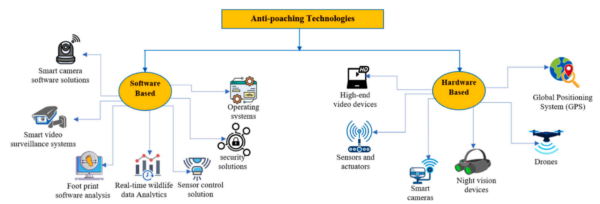
Wildlife poaching poses a significant threat to biodiversity, particularly in regions like Africa, where the natural habitats of animals are frequently targeted by poachers. This illegal activity not only endangers various species but also pushes them towards extinction. Traditional anti-poaching methods, such as ranger patrols, are often ineffective due to the vastness of wildlife parks and the limitations of human resources. Consequently, there is an urgent need for automated systems that can enhance wildlife monitoring and conservation efforts.
Conventional anti-poaching strategies rely heavily on patrolling designated areas, which, given the expansive nature of wildlife parks, is not sufficient. The sheer size of these areas makes it challenging for rangers to cover all grounds effectively. Moreover, poaching is driven by various factors, including the demand for animal parts for food, decorative purposes, and medicinal uses, further complicating efforts to curb this illegal activity.
To address these challenges, the research introduces a sophisticated machine learning framework that leverages artificial intelligence to process large-scale image, video, and audio data in an unsupervised manner. This approach aims to improve the detection and categorization of both humans and animals, thereby providing timely alerts to wildlife officials about potential poaching activities.
Innovative Framework for Detection
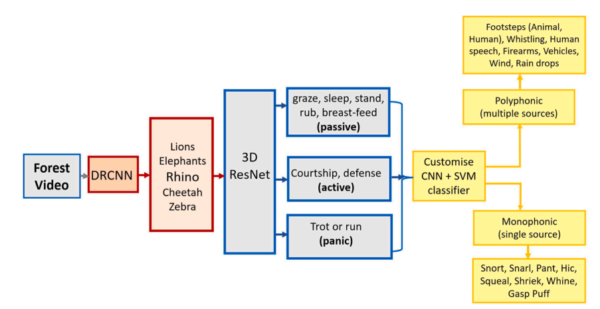
The research presents a comprehensive machine learning framework designed to detect poaching activities through the analysis of forest videos. This framework is built upon three core models, each serving a distinct purpose in the detection process. The first model employs Deep Residual Convolutional Neural Networks (DRCNN) to detect and identify wildlife in the videos. This model is crucial for recognizing different animal species and their presence in the monitored areas.
The second model utilizes a Residual Network (ResNet) to analyze and recognize the behaviors and movements of the identified wildlife. By understanding the typical behaviors and actions of animals, the system can assess the likelihood of potential threats or unusual activities that may indicate poaching.
Additionally, the framework incorporates a customized Convolutional Neural Network (CNN) combined with a Support Vector Machine (SVM) for sound classification. This model focuses on categorizing the acoustic signals of wildlife vocalizations and other environmental sounds. By analyzing these sounds, the system can detect stress signals or other indicators of distress among animals, which may be linked to poaching activities.
Furthermore, the framework integrates information technology tools and video recordings from Unmanned Aerial Vehicles (UAVs) or other sources to provide a more precise assessment of wildlife activities. This integration emphasizes the need for greater intervention and enhanced monitoring of wildlife conservation areas.
Significant Findings and Outcomes
The proposed machine learning framework demonstrated significant improvements in detecting animal actions and sounds under stress compared to conventional wildlife guard detection methods. The use of advanced neural networks allowed for a more accurate identification of wildlife species, their behaviors, and vocalizations, which are critical in assessing potential threats to wildlife.
Importantly, the framework’s ability to analyze video and audio data from various sources, including UAVs, provided a comprehensive view of wildlife activities. This holistic approach enabled the system to offer precise assessments of potential poaching incidents, thereby enhancing the overall effectiveness of wildlife conservation efforts.
The research highlights the universal applicability of the framework across different animal species, as it is based on typical behaviors, actions, and vocalizations according to context. This adaptability ensures that the system can be implemented in diverse wildlife environments, making it a valuable tool in the fight against poaching.
Future Prospects and Impact
The development of this machine learning framework marks a significant advancement in wildlife conservation efforts. By providing a more accurate and comprehensive method for detecting poaching activities, the framework has the potential to revolutionize how wildlife monitoring is conducted. Its integration with UAV technology and advanced neural networks offers a promising solution to the challenges faced by traditional anti-poaching methods.
Looking ahead, the framework’s adaptability and precision in analyzing wildlife behaviors and vocalizations could lead to further innovations in conservation technology. Researchers and conservationists are encouraged to explore the potential of this framework in various wildlife environments and to contribute to its ongoing development.
We extend our gratitude to the authors for their valuable contribution to wildlife conservation. For those interested in learning more or sharing insights, please refer to the full research article.
Reference: John A. Adebisi, Leokadia N.P. Ndjuluwa. A machine learning framework for combatting poaching challenges in wildlife. DOI: https://doi.org/10.1016/j.hssust.2026.02.002