
Satellite Communication (SatCom) offers a lifeline for internet connectivity in regions where traditional infrastructure is impractical. This research provides a comprehensive analysis of SatCom performance and usage across Europe and Africa, highlighting challenges and potential optimizations for improved service delivery.
Addressing the Connectivity Gap
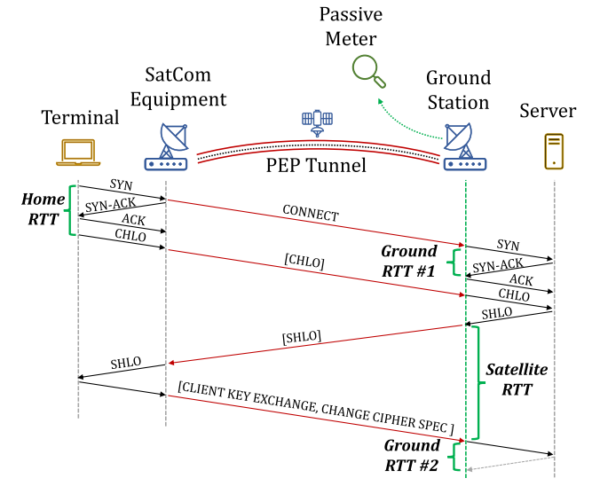
In today’s world, where high-speed internet access is often taken for granted, vast regions across the globe remain underserved by traditional infrastructure. Satellite Communication (SatCom) emerges as a crucial solution in these areas, especially in geographically challenging or economically constrained locations, such as rural and mountainous regions in developed countries and entire territories in underdeveloped nations. However, SatCom, particularly using geostationary satellites, faces significant challenges that impact internet quality. These include high propagation latency and limited shared capacity, which can degrade the user experience. The distance between geostationary satellites and Earth results in a round-trip time (RTT) of at least 550 milliseconds, which can be further exacerbated by congestion and link quality issues, adding seconds to the RTT. This latency, combined with the constrained capacity of satellite links, poses a challenge to achieving the internet access quality expected by users accustomed to fiber or 5G technologies.
Understanding these challenges is vital as SatCom serves as the primary means of connectivity for many communities. The study of SatCom usage and performance is not only about identifying the limitations but also about exploring optimization strategies that can enhance service quality. The research conducted by Gabriele Merlach and colleagues provides a unique perspective on this issue by analyzing a large dataset of SatCom traffic across Europe and Africa. This analysis is crucial for identifying the specific challenges faced by SatCom users and for developing strategies to mitigate these issues, thus improving the overall internet experience for users in these regions.
Innovative Research Approach
The research conducted a large-scale passive characterization of internet traffic carried by an operational SatCom provider. By leveraging passive measurements at the satellite ground station, the researchers were able to observe a substantial amount of traffic—634 terabytes of network packets and 5.6 billion flows—from tens of thousands of customers in over 20 countries across Europe and Africa. This comprehensive dataset, collected between June and July 2023, provided insights into the different internet usage habits across these regions.
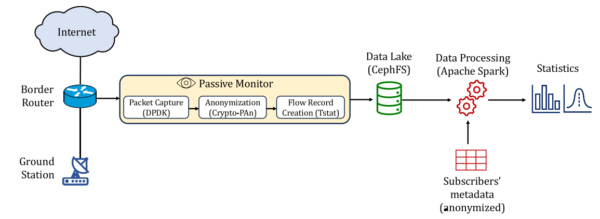
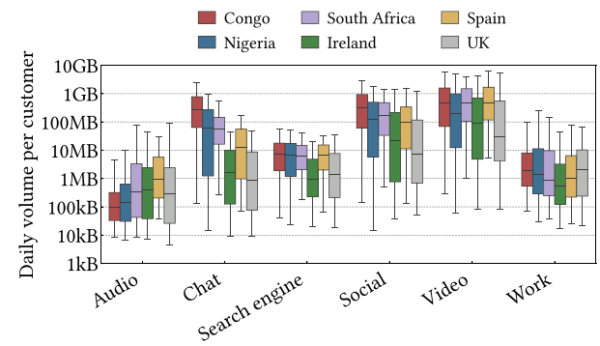
The study focused on several key aspects of SatCom performance and usage. It examined the impact of SatCom technology on internet performance, particularly the challenges posed by high RTT and limited capacity. The research also explored the adoption and performance of newer internet protocols, such as IPv6 and QUIC, within SatCom networks. The analysis highlighted the differences in internet usage patterns between Europe and Africa, noting the significant data consumption by chat and social media applications in Africa due to community WiFi points sharing SatCom access.
Furthermore, the study identified technical challenges related to Content Delivery Networks (CDN) and Domain Name System (DNS) resolution issues. The use of open DNS resolvers located in distant regions increased DNS response times, impacting server selection policies of CDNs and DNS resolvers. The research also pointed out the limitations of Performance Enhancing Proxies (PEP) in handling QUIC flows due to the encrypted nature of QUIC headers, affecting throughput compared to PEP-accelerated TCP traffic.
Key Findings and Insights
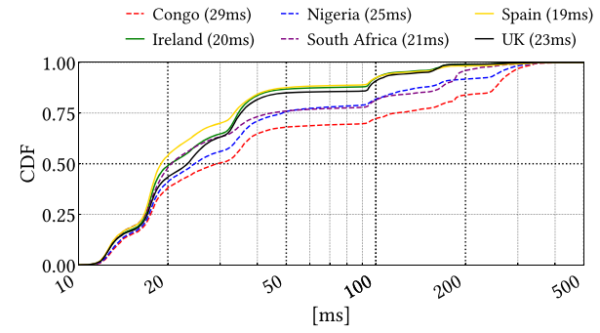
The research provided several key findings regarding SatCom usage and performance. In Africa, chat and social media applications consumed significantly more data than in Europe, driven by community-based hotspots sharing SatCom access. This usage pattern resulted in peak internet usage times occurring in the morning in African countries. The study also highlighted the substantial impact of satellite channel protocols on RTT, with link quality and congestion potentially adding seconds to the end-to-end delay.
Another critical observation was the routing of all traffic through a single ground station in Europe, which added latency to services accessed in Africa. Additionally, the study found that the transition to newer protocols like QUIC and IPv6 was slower in Africa compared to Europe, affecting protocol performance and adoption rates.
Future Directions and Opportunities
This research offers valuable insights into the complexities of SatCom networks and their impact on internet performance. By identifying the specific challenges faced by SatCom users, the study provides a foundation for developing optimization strategies to enhance service quality. Potential improvements include deploying additional ground stations to reduce latency and optimizing DNS request handling to improve server selection.
The findings underscore the importance of continued research and innovation in SatCom technology to bridge the digital divide and provide reliable internet access to underserved regions. The authors invite further collaboration and input from the research community to explore these challenges and solutions in greater depth.
Reference: Gabriele Merlach, Daniel Perdices, Gianluca Perna, Martino Trevisan, Danilo Giordano, Marco Mellia. “Internet usage and performance in GEO satellite networks: A large-scale study across Europe and Africa.” Computer Networks 282 (2026) 112244. DOI: https://doi.org/10.1016/j.comnet.2026.112244