Engineering

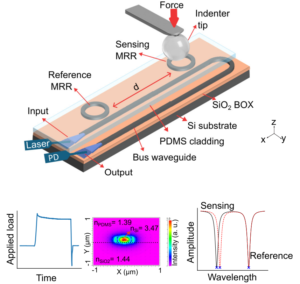
Elasto-Optic Transduction in Polymer-Cladded Silicon Microrings for 2D Force Mapping

Explore the potential of silicon photonic microring arrays coated with PDMS to detect localized forces through elasto-optic shifts, offering real-time mapping at micrometer resolution on flat surfaces, ideal for unbiased cellular studies and advancing mechanobiology, soft-matter metrology, and tactile interfaces in a scalable, biocompatible format. Addressing Microscale Force Measurement in Soft and Biological Matter Measuring […]

Elasto-Optic Transduction in Polymer-Cladded Silicon Microrings for 2D Force Mapping Read More »
Annual Memory in the Terrestrial Water Cycle 

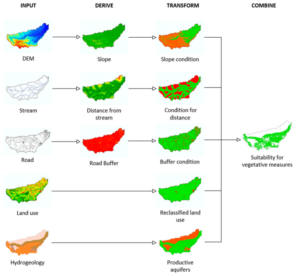
This research refines a GIS-based toolbox by integrating high-resolution land-cover data and new models for afforestation and riparian forest buffers, applied to six European river basins to map suitable locations for large-scale nature-based solutions that reduce hydrometeorological risks and highlight opportunities for combined implementations. Addressing the Escalating Hydrometeorological Risks with Nature-Based Solutions Climate change is

Annual Memory in the Terrestrial Water Cycle  Read More »

Real-Time Data in Urban Sustainability

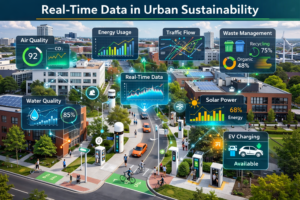
This editorial explores the role of distributed sensors and real-time data in improving urban management, addressing sustainability issues through proactive strategies, digital twins, and inclusive frameworks, drawing on worldwide experiences to inform better decision-making and equitable outcomes. Urban Challenges: The Need for Better Environmental Data Integration Cities are confronting growing pressures from climate change, air

Real-Time Data in Urban Sustainability Read More »

Insar for landslide detection with a bridge

Analyzing Landslide-Bridge Interactions Through InSAR and Numerical Modeling

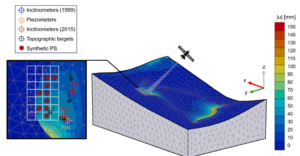
This study integrates InSAR satellite monitoring with three-dimensional numerical modeling to examine the effects of a landslide on a bridge, addressing the one-dimensional limitations of InSAR through modeling-derived displacement directions and validating simulations with observed surface deformations for improved understanding of infrastructure vulnerabilities in geologically unstable regions. Understanding the Challenge: Landslides and Infrastructure Risks Landslides

Analyzing Landslide-Bridge Interactions Through InSAR and Numerical Modeling Read More »

Quay Amsterdam canal construction INSAR SHM

Structural Health Monitoring throught enhanced MT-InSAR

This research introduces a structural-based inverse approach that integrates MT-InSAR characteristics with numerical simulations of damage mechanisms, enabling the identification of the minimum number and optimal placement of persistent scatterers to assess surface displacements’ representativeness for specific infrastructure monitoring needs, surpassing traditional density-based evaluations in precision and reliability. The Challenge in Infrastructure Monitoring A significant

Structural Health Monitoring throught enhanced MT-InSAR Read More »

The Comprehensive Global Building Dataset: GlobalBuildingAtlas

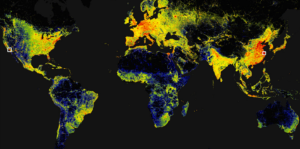
GlobalBuildingAtlas introduces an open dataset with global coverage of 2.75 billion building polygons, 3 m resolution height maps, and LoD1 3D models, derived from satellite imagery, offering enhanced detail for urban analysis, planning, and monitoring progress toward the UN’s Sustainable Development Goals. The Need for Detailed Global Building Information Buildings serve as the foundation of

The Comprehensive Global Building Dataset: GlobalBuildingAtlas Read More »

Why Are Some Watersheds More Sediment-Productive Than Others? An Explainable AI Approach

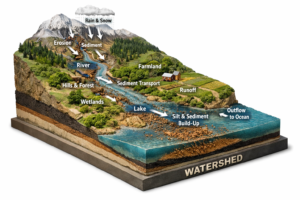
High-frequency turbidity sensors from 134 USGS stations, paired with RUSLE erosion estimates and explainable random forest models, map sediment yield and delivery ratios across the contiguous United States, revealing that human-modified landscapes dominate sediment transport efficiency while natural factors control total production, and highlighting priority sub-basins for targeted management in the Upper Mississippi and Chesapeake

Why Are Some Watersheds More Sediment-Productive Than Others? An Explainable AI Approach Read More »

Machine Learning for Iceberg Stability: Ground Imagery and Logistic Regression Offer New Practical Insights

Analyzing thousands of icebergs captured in time-lapse footage from Alaska and Greenland, this research demonstrates that logistic regression applied to visible width and height can help estimate the probability of instability providing engineers with a foundational, field-derived method for assessing capsize risk in Arctic coastal environments. The Challenge of Iceberg Capsize in Arctic Waters Iceberg

Machine Learning for Iceberg Stability: Ground Imagery and Logistic Regression Offer New Practical Insights Read More »

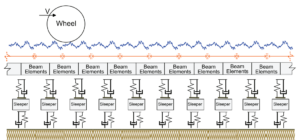
Bidirectional LSTM Networks Enable High-Resolution Railway Track Stiffness Monitoring from Drive-By Vibrations

TU Delft researchers present an LSTM-BiLSTM architecture that combines sleeper-level framing of axle-box acceleration signals with LSTM-based temporal feature extraction and bidirectional processing to deliver accurate, simultaneous estimation of railpad and ballast stiffness at individual sleeper resolution — even under realistic measurement noise. The Critical Need for Accurate Track Stiffness Monitoring Railway track stiffness is

Bidirectional LSTM Networks Enable High-Resolution Railway Track Stiffness Monitoring from Drive-By Vibrations Read More »

Monitoring Amsterdams Bridges with InSAR

A structured Delft–Amsterdam research collaboration integrates bridge typologies, expected failure mechanisms, and satellite viewing geometry to translate one-dimensional MT-InSAR measurements into practical damage indicators, demonstrating how regional-scale millimetre-level displacement data can support systematic structural evaluation of urban bridge networks. The Urban Bridge Monitoring Dilemma Across Europe and beyond, bridge networks are aging under increasing traffic

Monitoring Amsterdams Bridges with InSAR Read More »