
DEM Resolution with RRDPM
The RRDPM model improves digital elevation model resolution, enhancing detail recovery for land and seabed regions for scientific applications.
DEM Resolution with RRDPM Read More »
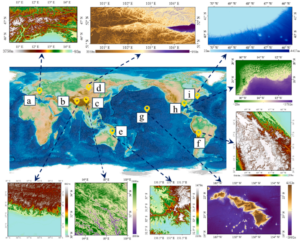
The RRDPM model improves digital elevation model resolution, enhancing detail recovery for land and seabed regions for scientific applications.
DEM Resolution with RRDPM Read More »

Researchers have developed a deep learning-based methodology for detecting and evaluating pavement surface damage. This approach enhances road safety and maintenance strategies by providing accurate, scalable, and objective assessments of pavement conditions.
Deep Learning for Pavement Damage Detection Read More »
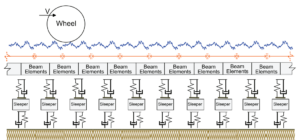
TU Delft researchers present an LSTM-BiLSTM architecture that combines sleeper-level framing of axle-box acceleration signals with LSTM-based temporal feature extraction and bidirectional processing to deliver accurate, simultaneous estimation of railpad and ballast stiffness at individual sleeper resolution — even under realistic measurement noise. The Critical Need for Accurate Track Stiffness Monitoring Railway track stiffness is

A gradient guided adaptive sampling method that repositions collocation points to reduce computational cost, improve stability, and help physics informed neural networks handle complex, high dimensional PDE simulations more efficiently, making advanced scientific machine learning more practical for real engineering analysis and design workflows today. Why Engineers Should Care Partial differential equations (PDEs) underpin much
PACMANN: Smarter Point Placement for AI-Based PDE Solvers Read More »