
Aerosol Mapping in Europe
This study integrates chemical transport models with machine learning to create high-resolution maps of organic aerosol concentrations across Europe.
Aerosol Mapping in Europe Read More »
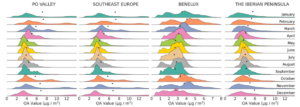
This study integrates chemical transport models with machine learning to create high-resolution maps of organic aerosol concentrations across Europe.
Aerosol Mapping in Europe Read More »

Analyzing thousands of icebergs captured in time-lapse footage from Alaska and Greenland, this research demonstrates that logistic regression applied to visible width and height can help estimate the probability of instability providing engineers with a foundational, field-derived method for assessing capsize risk in Arctic coastal environments. The Challenge of Iceberg Capsize in Arctic Waters Iceberg
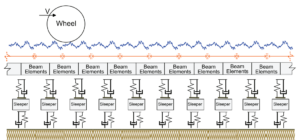
TU Delft researchers present an LSTM-BiLSTM architecture that combines sleeper-level framing of axle-box acceleration signals with LSTM-based temporal feature extraction and bidirectional processing to deliver accurate, simultaneous estimation of railpad and ballast stiffness at individual sleeper resolution — even under realistic measurement noise. The Critical Need for Accurate Track Stiffness Monitoring Railway track stiffness is

Neural Radiance Fields (NeRFs) have changed how engineers think about 3D capture. With a modest set of photos, you can reconstruct impressively photorealistic 3D scenes. For many teams, that alone feels like magic. But then comes the real-world question: How do you edit those scenes? Remove a chair. Enlarge a TV. Swap out a tree
Volumetric Disentanglement: A Practical Path to Object-Level Editing in NeRF Scenes Read More »
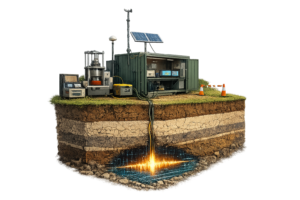
A data-driven review shows how modern machine-learning models consistently outperform traditional empirical equations in predicting soil shear modulus and damping ratio, offering geotechnical engineers a clearer, more efficient path to characterizing dynamic soil behavior while highlighting practical limitations, data requirements, and future research needs. Why Soil Dynamics Still Challenge Engineers Accurate characterization of soil dynamic
Machine Learning Meets Soil Dynamics Read More »

A gradient guided adaptive sampling method that repositions collocation points to reduce computational cost, improve stability, and help physics informed neural networks handle complex, high dimensional PDE simulations more efficiently, making advanced scientific machine learning more practical for real engineering analysis and design workflows today. Why Engineers Should Care Partial differential equations (PDEs) underpin much
PACMANN: Smarter Point Placement for AI-Based PDE Solvers Read More »
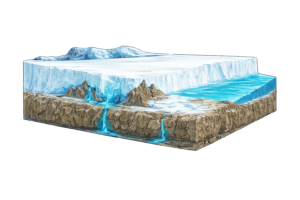
New research reveals how smarter, streamlined bedrock modeling can closely match complex 3D simulations, transforming Antarctic ice-sheet forecasts. By boosting speed without sacrificing accuracy, it sharpens sea-level rise predictions, empowers larger climate ensembles, and equips planners worldwide with clearer insights for coastal futures ahead today. A Serious Issue Antarctic ice melt contributes to sea-level rise,
Advancing Antarctic Ice Sheet Projections with Bedrock Modeling Read More »